What retirees should know about Kenya’s tax-free pension changes
By Mabonga Makhanu, July 6, 2026The retirement landscape in Kenya has changed significantly following recent amendments to the country’s tax laws, with retirees and their beneficiaries now set to enjoy greater tax relief.
Under the previous tax regime, only a lump sum of Ksh600,000 and annual pension income of up to Ksh300,000 (or Ksh25,000 per month) were exempt from income tax.
Anyone retiring at the standard corporate or public sector retirement age of 60 was required to pay tax on amounts exceeding these thresholds, with rates of up to 30 per cent.
Full tax exemption was only available to pensioners aged 65 years and above, leaving many retirees with reduced retirement benefits.
Under the current law, pension and gratuity payments are fully exempt from income tax, provided an individual retires at the retirement age specified in their pension scheme, withdraws early due to ill health, or has been a member of the scheme for at least 20 years.
The changes eliminate the previous age-based tax penalty and ensure eligible retirees receive their full pension benefits tax-free.
The reforms have also enhanced retirement savings by increasing the tax-deductible pension contribution limit by 50 per cent.
Previously, employees could only deduct a maximum of Ksh20,000 per month (Ksh240,000 annually) from their gross salary for pension contributions.
The new limit has been increased to Ksh30,000 per month (Ksh360,000 annually), allowing workers to save more for retirement while reducing their taxable income during their working years.
Previous retirement benefits tax laws
The operational framework for pension schemes has also been simplified.
Previously, pension schemes were required to undergo a dual registration process with both the Kenya Revenue Authority (KRA) and the Retirement Benefits Authority (RBA) to qualify for tax-exempt status.
Under the revised regulations, registration with the RBA alone is now sufficient, eliminating administrative duplication and streamlining compliance for pension schemes.
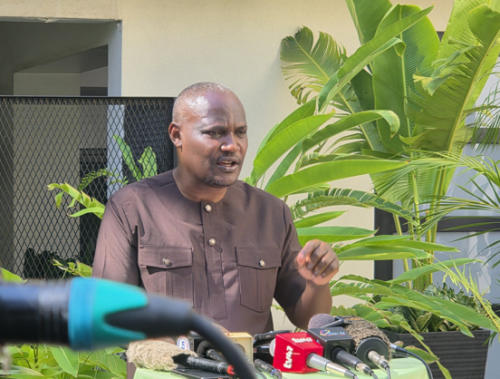
Speaking during a television interview, Treasury Cabinet Secretary John Mbadi said the government first removed taxes on pensions through the Tax Laws (Amendment) Act, 2024, which was assented to on December 27, 2024.
“We removed taxes on pensions with the Tax Laws Amendment Act, which was assented to on the 27th of December 2024, the first tax proposals that I took to Parliament as a Cabinet Secretary. Now, the pension is tax-free, as is the gratuity that is paid to employees,” Mbadi said.
He noted that the previous amendments only benefited the primary pensioner and did not extend to beneficiaries after the death of a member.
“But it was only covering those who were the primary beneficiaries or the primary pensioners. Like today, if you leave your job and you get a pension, you are not required to pay tax. But beneficiaries, in the unfortunate event that the pensioner passes on, the beneficiaries, the wife, and the children, would still be paying taxes,” he added.
The new retirement tax laws
Under the new law, which took effect on July 1, beneficiaries of pension schemes will also enjoy full tax exemption on pension payments, ensuring families receive the full value of the benefits left to them by their loved ones.
“Now we have decided with this new law, the law that is now in place from today, that now the beneficiaries of pensions will not also pay tax,” Mbadi said.