The money game: Why Morocco’s CHAN win is more than football
By Faith Lagat, August 31, 2025On August 30, 2025, Morocco’s Atlas Lions roared to victory, clinching a thrilling 3-2 win over first-time finalists Madagascar in the African Nations Championship (CHAN) final at Nairobi’s Moi International Sports Centre, Kasarani.
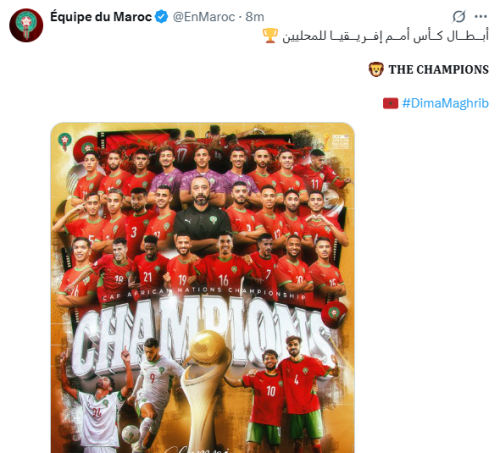
The triumph marked Morocco’s third CHAN title, cementing their status as the tournament’s most successful team.
Beyond the glory of lifting the newly unveiled CHAN trophy—designed with 54 lines symbolising Africa’s unity—the victory brought a staggering Ksh453 million in prize money.
The financial windfall, coupled with individual accolades and broader socio-economic implications, underscores why Morocco’s win transcends the pitch, weaving a narrative of national pride, economic opportunity and African football’s rising prominence.
Tournament that raised stakes
The financial stakes of CHAN 2024 were unprecedented. The Confederation of African Football (CAF) boosted the total prize pool by 32 per cent compared to the previous edition, pushing the figure to $10.4 million.
Morocco’s hefty payout dwarfs the Ksh155 million earned by runners-up Madagascar and the Ksh90 million awarded to Senegal for their Fair Play accolade. Even Kenya’s Harambee Stars, despite their quarter-final exit, pocketed Ksh 58 million, highlighting the tournament’s new lucrative nature.
For Morocco’s domestically based players, who compete exclusively in local leagues, the prize money is more than a bonus. It could elevate their careers, fund personal development and strengthen the infrastructure of clubs like RS Berkane, Raja Casablanca and Wydad Casablanca, which supplied key squad members. The ripple effect extends to grassroots academies, potentially nurturing the next generation of Atlas Lions.
Individual brilliance amplified Morocco’s dominance. Striker Oussama Lamlioui claimed the Golden Boot with six goals, including a spectacular 40-yard strike that sealed the final. Midfielder Rabie Mohammed Hrimat was named Player of the Tournament for his pivotal contributions, including decisive goals against Zambia and DR Congo.
These accolades elevate the players’ profiles, attract attention from scouts and sponsors, and amplify their earning potential. For a nation already renowned for its football pedigree—having reached the 2022 FIFA World Cup semifinals—CHAN’s focus on home-based talent underscores Morocco’s depth and commitment to developing local stars.
Cultural pride and continental symbolism
Beyond the financial and individual rewards, Morocco’s victory carries cultural and symbolic weight. The redesigned CHAN trophy, with its gold and silver detailing and map of Africa at its core, embodies unity and shared passion for the game. By becoming the first nation to lift it, Morocco etched its name into football history.
The victory was witnessed by dignitaries including FIFA President Gianni Infantino, Kenya’s President William Ruto and CAF President Patrice Motsepe. Their presence reflected not only the importance of Morocco’s win but also East Africa’s growing stature as a football hub. Co-hosted by Kenya, Tanzania and Uganda, CHAN 2024 was a logistical triumph, attracting 40 million viewers and filling stadiums across the region. Infantino’s praise for Kenya’s renovated Kasarani and Nyayo stadiums signals confidence in East Africa’s readiness for AFCON 2027, which Kenya hopes to stage as a global spectacle.
In Kenya, football’s link to social policy is also becoming clear. President Ruto’s pledge to cover half the cost of affordable housing units for Harambee Stars players illustrates how football success can intersect with national development goals. Each player is set to receive a two-bedroom house, with government support helping them transition into homeownership. It is a reminder that football, when harnessed strategically, can directly shape livelihoods and communities.
Future of African football’s money game
Morocco’s win is also a call to other African nations. Football is no longer just about pride and prestige; it has become an engine of economic growth. The Ksh453 million prize money, if managed wisely, could fund training facilities, youth academies and community programmes, amplifying football’s impact far beyond the stadium.
The challenge is ensuring transparent and accountable management of such windfalls. In past tournaments, prize money has been mismanaged, with players and federations shortchanged. Morocco’s federation, known for strong governance, is well-placed to avoid such pitfalls, but the broader African football ecosystem must address corruption and inadequate infrastructure to sustain momentum.
The triumph also highlighted the competitive rise of smaller nations. Madagascar, once overlooked, reached the final with grit and flair, taking home Ksh155 million in the process. Their journey proves that underdogs can challenge the giants and that African football is evolving towards greater parity.
For Kenya, the CHAN experience has set the stage for preparations for AFCON 2027. The Ksh 44.79 billion infrastructure bond for Talanta Sports City Stadium reflects the government’s ambitions to turn the country into a regional sports powerhouse.
Ultimately, Morocco’s CHAN victory is more than a footballing achievement. It is a story of resilience, excellence and economic promise. The millions in prize money, the glittering new trophy and the individual accolades are catalysts for growth, elevating Morocco’s footballing legacy while inspiring a continent.
The win proves that in Africa, the beautiful game is also the money game—one that carries the power to transform communities, ignite national pride and redefine the future of sport on the global stage.