Advertisement
Sexist tropes show Kenya still scorns women
Friday 27th June, 2025 03:40 AM|

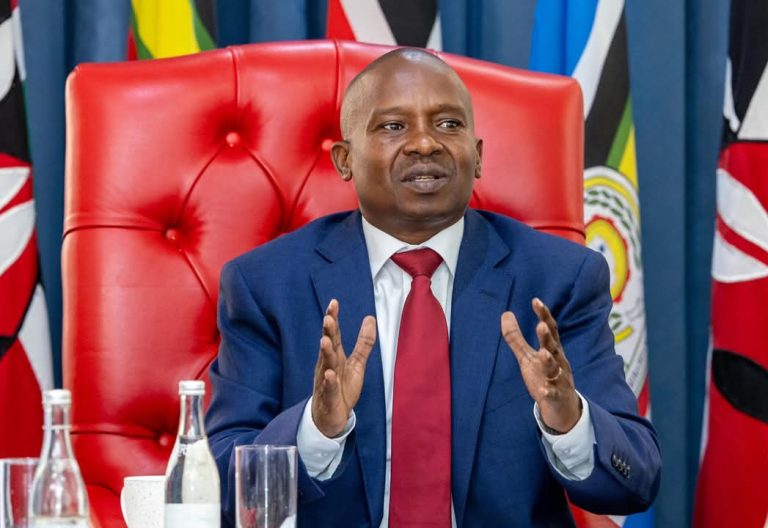
The governor of Taita Taveta, Andrew Mwadime, has found himself in a tight corner, just as many Kenyan politicians have in the past. Appearing before the Senate’s County Public Accounts Committee, he lamented the exploitation of his county’s resources.
“In Taita Taveta,” he said, “people come and marry our very beautiful girls and leave us with the short and quarrelsome ones.” It did not take long for the reactions to start coming in. Some committee members rebuked him on the spot, and soon the avalanche of rebukes began to flow in.
He apologised, but the damage was done. The governor’s metaphor seemed intended to draw attention to the exploitation of the county’s resources. Taita Taveta, on paper, ought to be one of the wealthiest counties.
It is home to some of the most coveted animals in the tourist circuit. The large animal park occupies the most significant portion of the county’s land resource. The beautiful lakes in its exotic parts are hardly known to many Kenyans.
You Might Also Like


The county boasts a rich history spanning the colonial era and the Second World War. Much of this history remains untold and underdeveloped for tourism. Taita Taveta is one of the wealthiest counties, with extensive mineral deposits. It is a story known only to a few and has yet to be harnessed for the benefit of the local people.
One can continue lamenting the exploitation of the county’s resources. This is what the governor was doing when, attempting to draw attention to this treatment by the national government and outsiders, he resorted to a metaphor that he believed would most effectively convey his point.
In the process, he found himself in a hole many male politicians had fallen into. Two decades ago, then minister for justice, Kiraitu Murungi, responding to calls from bilateral and multilateral partners in the development sector demanding that Kenya tackle corruption, replied that such calls were “like raping a woman who is already too willing”.
References to women as part of male politicians’ political rhetoric seem to have a long history. A popular senator, not too long ago, while on the campaign trail, referred to a female political opponent as “not attractive enough to rape”, while another in the nation’s capital accused yet another female opponent of seeking votes by “swinging bare behinds”.
The heated exchange on live TV between two candidates for Nairobi’s elective offices remains memorable. The gubernatorial candidate said of his female panellist who was also contesting an elective seat: “She is so beautiful everybody wants to rape her. You are chasing men all over, nobody wants you. You think you are beautiful, you are not”.
Why have these misogynistic remarks persisted in Kenya, and indeed the continent’s political grammar? Maybe it is because there are hardly any repercussions. Kiraitu Murungi, for example, went on to flourish as a minister in the Mwai Kibaki administration and was later elected governor for Meru County.
There is always outrage at the sexist remarks, but this outrage fizzles out soon after. Kenya has invested significant intellectual and other resources in trying to build a society that values its women. There is a ministry for gender issues, a gender commission, and a National Cohesion and Integration Commission, all with a mandate for equality and respect. Yet, the problem continues. A different approach may be needed.
The writer is the Dean of Daystar University’s School of Communication.
Author
Levi Obonyo
View all posts by Levi ObonyoLatest News








Advertisement
More on Insights