Samia Suluhu breaking the glass ceiling: East Africa elects its first woman president
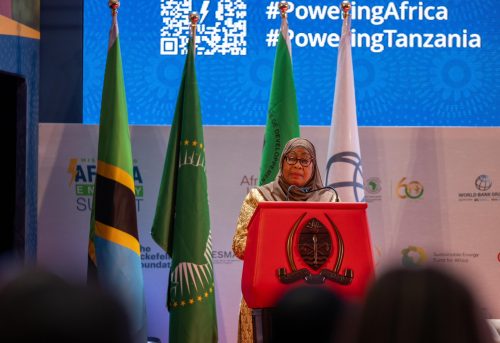
By Faith Lagat, November 1, 2025In a landmark moment for gender equality and regional politics, Tanzania’s electoral commission declared on Saturday, November 1, 2025, that President Samia Suluhu Hassan had secured a resounding victory with nearly 98% of the votes.
This triumph not only hands Hassan a fresh five-year term to lead the East African nation of 68 million but also cements her place in history as the first woman to be democratically elected president in East Africa, a region long dominated by male leaders.
Ascending to the presidency in 2021 following the death of her predecessor and husband, the late John Pombe Magufuli, Hassan’s path-breaking win shatters the glass ceiling in a space where women have been sidelined for decades, inspiring a new generation amid the chaos of post-election unrest.
Historic shift
Hassan’s journey is a testament to resilience in a male-dominated political landscape. Tanzania, like much of East Africa, has been shaped by patriarchal structures since independence.
From Julius Nyerere’s one-party rule in the 1960s to the multi-party era post-1990s, the presidency has been an exclusive club for men, seven in total, all from the ruling Chama Cha Mapinduzi (CCM) party.
Women, despite comprising more than half the population, have faced systemic barriers: cultural norms confining them to domestic roles, limited access to education and funding, and political violence that deters participation.
According to UN Women data, Tanzania’s parliament boasts about 37% female representation thanks to special seats reserved for women since 2000, but executive power has remained elusive.
Hassan broke that mold in 2015 when she became the country’s first female vice president, a meteoric rise in a field where, before 2021, fewer than 10% of ministerial posts went to women.
This isn’t just a Tanzanian milestone, it’s a regional breakthrough. East Africa’s seven nations, Tanzania, Kenya, Uganda, Rwanda, Burundi, Ethiopia, and Somalia, have seen scant female leadership at the top.
Burundi’s Sylvie Kinigi served briefly as acting president between 1993 and 1994, and Ethiopia’s Sahle-Work Zewde holds a largely ceremonial post. No woman had ever won a direct presidential vote in the region until now. Hassan’s 98% landslide, while raising questions about competitiveness, marks a seismic shift in regional politics.
Female leadership pursuits in EA politics
Suluhu’s 2025 election as Tanzania’s first democratically chosen female president sharply contrasts with the unsuccessful bids of women across East Africa.
Martha Karua, PLP leader and Kenya’s “Iron Lady”, came closest to executive power in 2022 as Raila Odinga’s running mate for deputy president, the first woman on a major party ticket, yet lost narrowly to William Ruto and former deputy president Rigathi Gachagua, finishing with zero electoral votes for the presidency after her own 2013 solo bid netted just 43,881 votes (under 1%).
Kenya’s Charity Ngilu (0.1% in 1997) and Wangari Maathai (<1,000 votes in 1997) were outspent and undermined.
Uganda’s Miria Obote (0.08% in 2006), Beti Kamya (0.06% in 2011), Faith Kyalya (0.31% in 2016), and Nancy Kalembe (0.31% in 2021) faced resource starvation.
Rwanda’s Victoire Ingabire Umuhoza was barred in 2010 and jailed in 2017; Burundi’s Rose Nahimana withdrew in 2015 amid violence; and Ethiopia’s Sahle-Work Zewde holds a ceremonial post since 2018, none securing an electoral mandate until Hassan’s 98% victory.
Victory amid unrest and controversy
The October 29 elections, however, were marred by unrest. Protests erupted across Dar es Salaam, Arusha, and other cities as demonstrators, mostly youth, tore down campaign posters, hurled stones, and set government buildings ablaze. Viral TikTok videos from @commonbuzzard26 showed tram buses engulfed in flames. Police responded with tear gas and live rounds, turning streets into battlegrounds.
The violence followed the electoral commission’s controversial move to exclude Hassan’s two main challengers from the opposition CHADEMA party, citing failure to sign a code of conduct. Critics have called the move repressive, reminiscent of past regimes that stifled dissent.

CHADEMA claimed on October 31 that over 700 people had been killed, a figure the government dismissed as “hugely exaggerated.” The United Nations human rights office reported at least 10 confirmed deaths in three cities and hundreds injured. Reuters could not independently verify the toll, but the clashes have left deep scars.
Images circulating on social media show young protesters crouched behind barricades, faces marked by defiance and despair—a reminder that democracy’s gains often come at a price.
A nationwide internet shutdown on October 30 compounded the chaos. Foreign Affairs Minister Thabit Kombo defended the move in a BBC interview, saying it was meant to stop “vandalism orchestrated through online platforms.” He added, “Their main communication medium was the internet,” pointing to damaged police stations and vehicles from the state electricity company, Tanesco. Kombo assured that restoration would follow “by tomorrow” and dismissed claims of unfair exclusion, stating that only those who violated the “form ya madili” code were barred.
Mandate for unity and inclusion
As calm tentatively returns, with Dar es Salaam peaceful by day but under curfew at night, Hassan inherits a divided nation. Economic growth driven by gas discoveries and tourism stands in contrast with rising inequality, youth unemployment, and climate pressures on agriculture. Her immediate task will be restoring trust, lifting digital restrictions, and addressing electoral flaws.
For women across East Africa, Hassan’s victory is more than symbolic—it’s transformative. It echoes the spirit of Kenya’s Nobel laureate Wangari Maathai and Rwanda’s record 61% female parliament. It challenges entrenched gender narratives in a region where women earn 30% less than men and face widespread gender-based violence, yet power much of the informal economy.
Hassan’s leadership will be judged not just by her policies but by how she bridges divisions and empowers the voices long muted in Tanzania’s democracy.
Her win, controversial or not, signals that East African women are no longer waiting for permission to lead. They are taking the mantle, and this time, the ceiling isn’t just cracking, it’s collapsing.