Saba Saba: What exactly happened during the July 7 demos
By Mabonga Makhanu, July 7, 2026On July 7, 1990, Kenya experienced a pivotal moment in its post-independence history when citizens took to the streets to demand political freedom, which became known as ‘Saba Saba Day’.
For nearly a decade, the country had operated as a de jure single-party state under the authoritarian rule of the late President Daniel arap Moi and the ruling Kenya African National Union (KANU) party. Public frustration with government corruption, political assassinations, and the suppression of basic human rights reached a boiling point, prompting nationwide calls for a transition to a multi-party democratic system.
Saba saba planners
The planned protests at the historic Kamukunji Grounds in Nairobi were meant to be led by prominent pro-democracy politicians Kenneth Matiba and Charles Rubia.
However, in an effort to thwart the movement, the Moi regime arrested and detained Matiba, Rubia, and several other reformists without trial just days before the scheduled event. Instead of intimidating the public, these pre-emptive arrests angered the citizens and served as a catalyst, drawing thousands of defiant Kenyans to the rally site despite heavy police deployment.
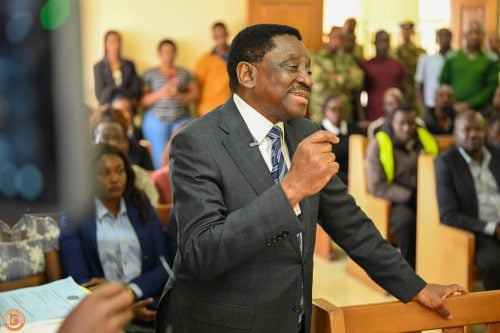
The government responded to the gathering with overwhelming brutality, turning the peaceful assembly into a violent battleground.
Armed police units used tear gas, batons, and live ammunition to disperse the crowds, causing the chaos to spill over from Nairobi into other towns like Kisumu, Murang’a, and Thika.
Over four days of unrest, official records stated that more than 20 people lost their lives, while civil society groups estimated the actual death toll to be much higher, with over a thousand citizens arrested and injured.
A critical driving force behind this movement was a group of young, progressive lawyers and activists who came to be known as the “Young Turks”. This courageous group included future prominent leaders such as James Orengo, Paul Muite, Gitobu Imanyara, Anyang’ Nyong’o, and Martha Karua, who stepped up to sustain the momentum after the senior politicians were detained. They utilised their legal expertise and grassroots mobilisation skills to challenge the regime’s tyranny, keeping the flame of reform alive in the face of immense personal danger.
Orengo, Shikuku and Muliro arrests
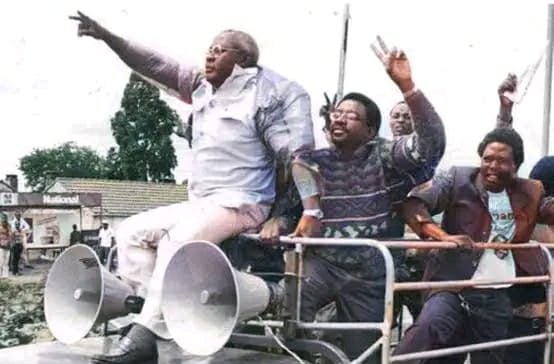
According to James Orengo, who was part of the protests agitating for change alongside Paul Muite, Masinde Muliro, and Martin Shikuku, entering the Kamukunji Grounds in the historic pickup truck created an image that has remained the face of Saba Saba Day for generations.
He stated that there were massive arrests on that day, especially targeting those who had rallied Kenyans to throng the streets.
Orengo recalled that their pickup truck was blocked near Kariobangi after Saba Saba, where they were all arrested and airlifted individually to their home districts to be remanded.
He remembered how the authorities dropped the late Masinde Muliro in Kitale and Shikuku in Kakamega while he was flown to Maseno, where he was detained for the night.
The following day, police officers drove him to Siaya, which was his jurisdiction. Orengo argues that, at the time, the police believed they were punishing them by detaining them in their home regions.
However, it turned out to be a blessing in disguise; in the morning, as he was being escorted to court, his constituents lined the roadside to witness the escort, standing in solidarity with him and causing unrest in Siaya town.
“When we got somewhere near Kariobangi, there was a major roadblock, and we were all arrested. We were taken to different police stations. That afternoon, we were taken to Wilson Airport, where we were flown to different destinations.”
‘We were all on the same aircraft. It first flew to Kitale, where Muliro was dropped off, before proceeding to Kakamega, where Shikuku was also dropped off. I was then flown to Kisumu and driven to Maseno Police Station, where I spent the night.”
Repealing Section 2A
Ultimately, the sacrifices made on that historic day permanently fractured the KANU regime’s absolute grip on power.
The international community condemned the state-sponsored violence, leading foreign donors to suspend crucial economic aid to Kenya.
Under intense domestic and international pressure, President Moi finally capitulated in December 1991, overseeing the repeal of Section 2A of the constitution, which officially restored multi-party democracy and reshaped Kenya’s political landscape forever.
Today, Orengo still stands strong, pushing for Saba Saba to be declared a national holiday.