Ruto unapologetic: What his ‘shoot-the-leg’ remark says about power in Kenya
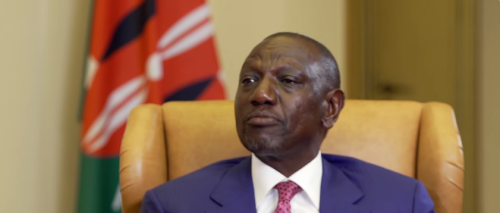
By Faith Lagat, November 10, 2025President William Ruto’s comments during a televised interview on November 9, 2025, have revived debate over state force and accountability in Kenya.
Asked about his “shoot the leg” directive issued during the Saba Saba protests earlier that year, Ruto said he did not regret the remarks. “I do not regret those comments at all because the law allows the police to use force when other people’s lives are in danger,” he stated.
Also Watch: Khwisero MP Aseka backs Ruto’s ‘shoot in the leg’ directive, blames opposition for unrest
Moments later, he added, “There is nowhere in the law that allows me to order the police… The police are independent, and there is nowhere in the law where I have the power to direct the police.” These remarks drew attention to the tension between executive authority and institutional independence in moments of unrest.
Origin of the directive
The directive was first issued on July 9, 2025, during protests marking the historic Saba Saba movement. Speaking in Kilimani, Ruto addressed incidents of property destruction. “Anyone who picks up petrol to burn someone else’s business or any other person’s property, such a person should be shot in the leg, taken to hospital, and then presented in court,” he said.
He described attacks on police stations as acts of aggression. “And I want to tell Kenyans clearly: anyone who attacks a police officer, anyone who invades a police station, that is a declaration of war… Enough is enough. It cannot go on any longer.” He added that he was fulfilling his constitutional responsibility to protect lives and property.
The directive followed unrest linked to economic grievances and public frustration. In 2024, protests against the Finance Bill, which included proposed taxes on basic commodities, led to demonstrations that saw protesters enter Parliament on June 25.
Amnesty International and the Kenya National Commission on Human Rights documented at least 63 deaths and over 500 injuries in 2024. Protests in June 2025 led to further casualties, including 16 deaths and over 400 injuries, according to rights groups. UNICEF condemned the death of a 12-year-old girl in Kiambu during the unrest. By July 2025, reports from Human Rights Watch recorded 51 deaths over two months of demonstrations.

Responses from leaders
Former Chief Justice David Maraga, during a visit to Kenyatta National Hospital on September 18, 2025, said he met protest victims whose “lives have been stalled by these injuries.” In a post, he described the directive as “outrageous and violation of our Constitution,” citing Articles 26 to 29. “These young men have spent 3 months in excruciating pain with their lives on hold,” he noted.
Former Public Service Cabinet Secretary Justin Muturi also criticized the order in a July 11, 2025, statement. He referred to it as “a command so reckless, so dismissive of human life,” and linked it to calls for forceful policing. He stated that the directive suggested an approach that “appears intent on criminalising protest while weaponising the police.”
The late Raila Odinga released a statement describing directives to “shoot to kill, maim, disorient, or shock citizens” as “wrong” and inconsistent with constitutional protections. Former Deputy President Rigathi Gachagua, speaking in Nyeri on September 14, 2025, said, “Rigathi Gachagua will rescind the order by William Ruto to shoot on the leg.” Prime Cabinet Secretary Musalia Mudavadi also urged restraint during the unrest.
Human Rights Watch has noted limited accountability for reported protest-related deaths. The Independent Policing Oversight Authority has publicly reported only a small number of prosecutions. Families of victims, including those of teacher Albert Omondi Ojwang and vendor Boniface Kariuki, have called for expedited justice processes.
Panel on victim compensation and continuing debate
A Panel of Experts on Victims’ Compensation, chaired by Prof. Makau Mutua, has faced legal challenges and objections. Rights organizations have recorded more than 180 protest-related deaths since 2024. Some political figures have called for an official apology before compensation proceeds.
Ruto has responded by saying, “The media… are free to lie and channel falsehoods. That is them.” Human rights organizations have emphasized the importance of transparency, oversight, and legal redress in addressing public concerns.
The debate surrounding the directive continues as Kenya navigates questions of public order, constitutional rights, and state power.