Normal working day? – Kenyans wake up to roadblocks and police barricades as country marks demos’ anniversary
By Ndiritu Wanjiru, June 25, 2026June 25 was nothing special; it was a normal working day, said the government, but that has not been the case during the morning hours of Thursday, June 25, 2026, as police barricaded roads all over Nairobi.
Afraid that June 25 would be a normal working day, as the government had promised, the thousands of Kenyans who woke up to find key sections of the country blocked, heavily policed and cordoned, and access to Nairobi severely curtailed seemed to have been let down.
Government officials on the eve of the second anniversary of the anti-Finance Bill protest of June 25, 2024, tried to alleviate the public nerves by assuring that businesses, schools, and public institutions would continue functioning even as Gen Z activists and civil society groups were planning demonstrations.
Interior Cabinet Secretary Kipchumba Murkomen has said June 25 will remain a normal working and school day across the country, despite notifications of planned public demonstrations marking the second anniversary of the 2024 anti-finance bill protests.
He made the remarks on Wednesday, June 24, while addressing the balance between constitutional rights and public order.

He added that security agencies had received notification from citizens intending to hold public demonstrations.
“Tomorrow is a normal working and school day. However, the police received a notification from some citizens who would like to engage in a public demonstration,” read the statement in part.
Different ground situation
At dawn on Thursday, June 25, 2026, police set up blockades and barricades on several major roads into the Nairobi Central Business District. There were significant restrictions in the access routes into Githurai, parts of Thika Road, Mombasa Road, Lang’ata Road, Mlolongo, Athi River and other key entry points.
Transport authorities cancelled services or rerouted them as commuters were left stranded due to concerns about violence. Long-distance passenger vehicles were reportedly stopped, and many employees had to walk considerable distances or remain stuck at home.
The best proof of that has been found in the CBD of Nairobi itself; the vast majority of businesses continued to stay shut, and employees and owners alike were not going to the city centre as the stores were closed.
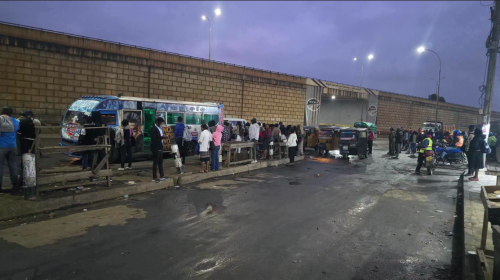
The government had assured residents that conditions would remain normal, and many traders seemed unlikely to believe that they could carry on with business as usual, given the extensive police deployments and closures of some roads and planned protests.
The irony of the day, repeated by authorities as routine, was heightened by the sight of closed shops in the capital. The massive security operation uncovered what is seen as a contradiction in the government’s messaging.
But if June 25 were just another normal working day, what was the reason that access to the capital was effectively cut off?
Why the protest’s anniversary?
The increased security comes as the country marks two years since the historic protests on June 25, 2024, when protesters broke into parliament buildings during protests against the Finance Bill.
These culminated in violent clashes between the protesters and the security forces and resulted in the killing of scores of Kenyans, and one of the most pivotal moments in Kenyan politics in recent history.
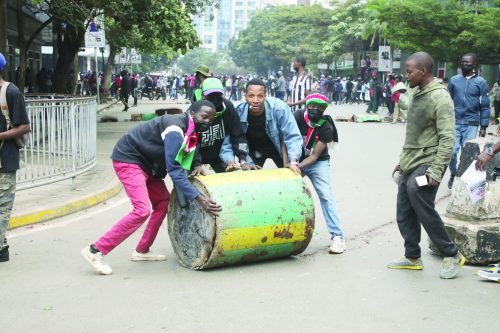
This year’s demonstrations are intended to pay tribute to the lives lost during the 2024 protest season as well as to push for accountability and government change.
The government’s efforts to prevent the attacks, in the form of the deployment of police officers, anti-riot police and roadblocks, actually undermined normal operations in several places, casting doubt on the government’s ability to prepare for the attacks to have the desired effect.
The warning sounded by the authorities and the state of the roads on Thursday morning seemed like two different situations for many Kenyans trying to make their way to work.
The images captured in Nairobi this morning highlight a disconnect between what is being officially reported and what people felt was going on.
The basic yet poignant question that many Nairobi commuters may have been left with was, if it was a normal working day, why didn’t it feel anything from normal?