Kenya’s Privatisation Bill: A step toward efficiency or risky reform?
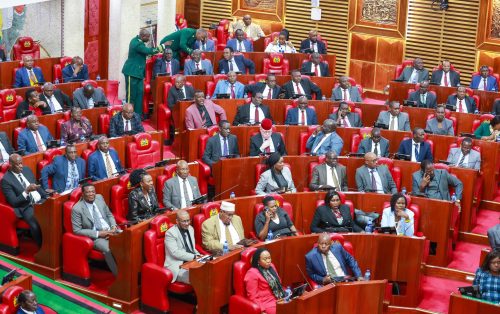
By Faith Lagat, October 10, 2025On October 9, 2025, Kenya’s National Assembly passed the Privatisation Bill (National Assembly Bill No. 36 of 2025), a significant legislative move aimed at overhauling the regulatory framework for privatising public entities.
According to a post by the National Assembly on X,”The Bill seeks to repeal and replace the existing framework, to enhance efficiency, transparency, and alignment with national economic priorities. The legislation, structured into six sections, establishes a comprehensive approach to privatisation, covering oversight, coordination, programme implementation, and management of proceeds.”
The passage of the Bill has sparked debate across political, business, and public spheres. Advocates argue that it is a strategic step toward improving Kenya’s economic performance, while critics caution about potential risks to public control of strategic assets and transparency.
Supporters highlight economic gains
Proponents of the Bill argue that it will unlock economic potential while reducing fiscal strain. The legislation establishes the Privatisation Authority, which is tasked with overseeing the identification of public entities for privatisation, conducting public consultations, and obtaining parliamentary approval before implementation.
The privatisation programme is capped at eight years from gazettement, a measure designed to ensure timely execution and prevent delays.
Kikuyu MP and National Assembly Majority Leader Kimani Ichung’wah defended the government’s agenda, emphasising profitable entities such as the Kenya Pipeline Company (KPC). He noted that selling a 65 percent stake in KPC, projected to raise Ksh100 billion, would free up resources for critical sectors like infrastructure and healthcare.
Ichung’wah further criticised opponents for not offering alternative solutions to Kenya’s financial challenges, stressing that privatisation provides a mechanism to generate revenue without resorting to tax hikes.
Prominent businessman Buzeki Kiprop Bundotich also backed the process, urging the government to sell dormant, loss-making parastatals. He argued that liquidating idle assets would unlock capital, reduce debt reliance, and stimulate economic growth. President William Ruto’s announcement at the London Stock Exchange opening, indicating KPC’s listing on the Nairobi Securities Exchange by March 2026, signals the administration’s commitment to deepening Kenya’s capital markets through privatisation.
Critics warn of risks to national interests
Despite support, the Bill faces strong opposition. Mumias East MP Peter Salasya vowed to oppose KPC’s privatisation, arguing that strategic assets should remain under public ownership to benefit ordinary Kenyans. Salasya dismissed suggestions of financial incentives, highlighting concerns over potential misuse of privatised resources.
Kakamega Senator Boni Khalwale also criticized the process as unclear, calling for transparent public participation and rigorous oversight, especially in relation to profit-making entities like KPC, which are vital to national security.
Public sentiment reflects these concerns. During forums in Machakos and Kajiado, residents demanded accountability for mismanagement in loss-making parastatals before any privatisation occurs.
Civic participation highlighted fears that privatisation could disproportionately benefit elites while ordinary citizens see little return. With over 80 percent of Kenya’s more than 200 parastatals reliant on government funding, scrutiny over the choice of entities and the management of proceeds remains high.
Balancing efficiency and accountability
The Privatisation Bill includes structured guidelines for agreements and transparent handling of proceeds, aiming to address public and political concerns. Supporters view it as a pragmatic tool to generate revenue, improve efficiency, and reduce reliance on the exchequer. Critics, however, consider it a risky reform that could compromise public control of strategic assets without adequate safeguards.
As implementation approaches, Kenya faces the challenge of balancing efficiency with accountability. Whether the privatisation framework will deliver economic benefits or become a source of controversy will depend on the government’s ability to ensure transparency, robust oversight, and meaningful public engagement in the process.