Advertisement
Is Kenya headed to anarchy? Inside the rise of political goonism
Saturday 11th April, 2026 02:01 PM|

Kenya is experiencing a worrying trend of politically related violence that is gradually defining the democratic space in the country. The use of organised groups, often termed ‘goons’, to block roads, disrupt rallies, and intimidate political opponents has been on the rise, and this is a major cause of concern as far as the level of political tolerance and the level of order in society are concerned.
What used to be viewed as a few isolated cases of political enmity is now beginning to become a common trend insofar as election-related activities and high-profile political gatherings are concerned.

Organised road blockages and riots have hampered political gatherings at numerous national events.
On Saturday, April 11, 2026, unidentified groups lit tyres and blocked roads in Kikuyu Constituency on Saturday morning. Police reopened the Southern Bypass after unidentified groups blocked sections of the road in Kikuyu Constituency, Kiambu County, on Saturday morning, hours before a scheduled political rally by former Deputy President Rigathi Gachagua.
You Might Also Like


In another instance in Meru County, youths were reported to have set up bonfires and blocked major roads in an effort to ensure that a political convoy was unable to reach a planned rally, thus disrupting transport in the region and increasing tension in the region. The same strategies have been witnessed in other areas, whereby impromptu roadblocks and planned inconveniences have been employed to thwart opposing political rallies.
Such moves not only disrupt political expression but also normal economic and social functioning, impacting ordinary citizens who rely on free transport channels. Such disruptions have been occasionally attributed by security agencies to politically based mobilisation, which they warn against, and criminal groups are being used on political fronts.
Political rallies attack and undermine democratic space.
In addition to road barricades, political rallies themselves have become more and more confrontational arenas.
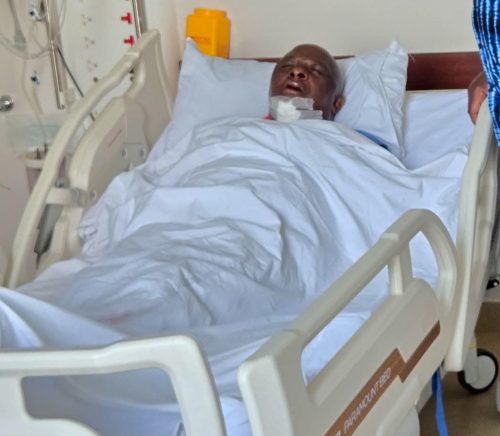
Vihiga senator Godfrey Osotsi suffered injuries in an attack in Kisumu on Wednesday, April 8, 2026, and officials airlifted him to Nairobi for treatment after being attacked by goons in Kisumu, leaving him with injuries.
In Gilgil, Nakuru County, an opposition rally was brutally interrupted when suspected contracted groups stormed the rally hall and attacked the people, and leaders had to shorten their speeches. This has happened in other regions of the country where political rallies and even non-political social gatherings like church services have been stormed by the disruptive groups causing panic and property destruction.
These cases are indicative of another challenge that the Kenyan democratic culture is confronted with, and that is, the loss of spaces to participate in politics in a safe manner. Political competition is more and more manifested not by policy discussion or popular participation but by threats and punitive action. The majority of the participants are thought to be the economically disadvantaged young people who are recruited using a small amount of money, which portrays the overlap of joblessness and political manipulation.
No culprits held accountable
The recurring inability to convict culprits strongly has helped to create a context in which such actions are perpetrated with relative impunity. This laxity, coupled with the increasing polarisation of politics, threatens to make the use of violence as a useful political instrument a normal phenomenon. When citizens fear attacks at rallies or political events, their participation in democracy is compromised.
The present trend casts challenging questions concerning the political stability of Kenya in the future. Although the nation is still squarely in constitutional rule, the growing trend of employing intimidation strategies is an ominous indicator of a dangerous trend that, unless mitigated, may derail the confidence of the citizens in the democratic structures and jeopardise the national unity in the long term.
Author
Latest News








Advertisement
More on Insights