How failing to pay NTSA instant fines could cost Kenyan drivers dearly
By Aloys Michael, July 8, 2026Thousands of Kenyan motorists risk facing serious inconveniences by ignoring or delaying payment of a National Transport and Safety Authority (NTSA) instant fine.
Although the penalty may appear minor at first, failing to pay it within the required seven-day window can trigger a chain of consequences that affect your driving privileges, access to government services and even land you in court.
Understanding these repercussions can help drivers avoid unnecessary legal and financial problems while staying compliant with Kenya’s traffic laws.
Consequences of unpaid NTSA fines
The NTSA requires motorists issued with an instant traffic fine to settle it within seven days. Missing this deadline does not make the fine disappear. Instead, the unpaid penalty remains on your record and may attract further enforcement measures.
One of the immediate consequences is restricted access to essential NTSA services through the eCitizen platform. Once your driver or vehicle records are flagged because of an unpaid instant fine, you may be unable to renew your driving licence, transfer ownership of a motor vehicle or complete other important NTSA transactions. These restrictions can be particularly frustrating for motorists who urgently need these services.
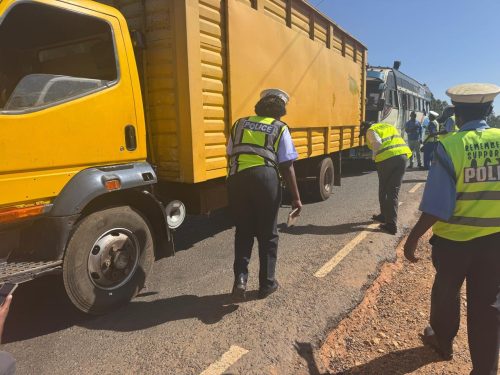
Failure to settle the fine may also see the matter escalated to court. If the case is forwarded for prosecution, motorists could face higher financial penalties than the original instant fine and may be required to appear before a magistrate. Continued non-compliance may also result in additional legal action, including warrants issued by the court where applicable.
Kenya’s traffic enforcement system also relies on demerit points to encourage responsible driving. Drivers who repeatedly violate traffic regulations or fail to comply with penalties risk accumulating demerit points that can ultimately lead to suspension of their driving licence for between six months and two years. Such a suspension means the motorist cannot legally drive during that period, potentially affecting employment and daily activities.
/X.
Important payment guidelines for motorists
Motorists should also be careful about how they pay NTSA instant fines. The authority has made it clear that instant fines are not payable through the eCitizen platform. Instead, payments should only be made physically at any Kenya Commercial Bank (KCB) branch or authorised KCB agent. This directive is intended to protect motorists from fraudsters who circulate fake SMS messages or misleading payment instructions designed to steal money.
It is also worth noting that there is an ongoing legal dispute concerning certain automated or algorithm-generated NTSA instant fines. The High Court has issued conservatory orders temporarily halting the issuance and enforcement of some of these automated penalties as the matter awaits determination.
Consequently, organisations such as the Road Safety Association of Kenya (RSAK) have advised motorists who receive disputed automated fines to challenge them through the appropriate legal channels while awaiting the court’s final decision.
For motorists, the safest approach is to stay informed, verify any instant fine received and pay legitimate penalties within the prescribed seven days.
Doing so helps avoid blocked eCitizen services, costly court proceedings, licence suspension and additional financial penalties, ensuring a smoother experience on Kenya’s roads.