Has Kenya achieved the political goals envisioned by Saba Saba heroes?
By David Nthua, July 6, 2026When thousands of Kenyans took to the streets on July 7, 1990, they were demanding far more than the return of multi-party politics.
They wanted a country where leaders could be held accountable, elections reflected the people’s will, the law protected every citizen equally, and government served the public rather than those in power.
Thirty-six years later, Kenya has achieved some of those goals. Others remain unfinished.
Multi-party democracy won
The biggest victory of the Saba Saba movement was ending the one-party state.
Today, Kenyans are free to form political parties, support candidates of their choice, criticise the government and vote in competitive elections.
Power has changed hands through the ballot, something that seemed almost impossible in 1990.
The Constitution of 2010 further strengthened democracy by introducing devolution, expanding the Bill of Rights, and reducing the concentration of power in the presidency.
Without Saba Saba, many of these reforms would likely not exist.
Accountability remains weak
Political freedom alone was never the end goal.
Saba Saba leaders wanted leaders who respected the law and public resources.
Yet corruption continues to dominate public debate. Billions of shillings are lost through questionable public spending, while prosecutions often drag on for years without meaningful convictions.
Many Kenyans still believe powerful individuals receive different treatment from ordinary citizens.
That is the opposite of the accountability envisioned by the architects of the movement.
Elections still divide
Kenyans can vote freely, but almost every general election leaves deep political divisions.
Disputed presidential results, prolonged court battles, and accusations of electoral malpractice have repeatedly tested public confidence in the democratic process.
A democracy is measured not only by the ability to vote but also by public trust in the outcome.
On that test, Kenya still has work to do.
Rights still tested
The Constitution guarantees freedom of expression, peaceful assembly and association.
However, demonstrations continue to expose the gap between constitutional rights and their practical enjoyment.
Every major protest reopens debate over police conduct, the use of force, protection of life and the balance between maintaining public order and safeguarding constitutional freedoms.
This suggests that some of the freedoms demanded during Saba Saba are still being contested.
Economic freedom lags
Political freedom has not automatically produced economic justice.
Millions of young Kenyans remain unemployed or underemployed. The cost of living continues to strain households, while many citizens struggle to access quality healthcare, education, and economic opportunities.
For many families, the promise of democracy has yet to translate into a better standard of living.
A democratic system is strongest when citizens experience its benefits beyond the ballot box.
Gen Zs revives the struggle
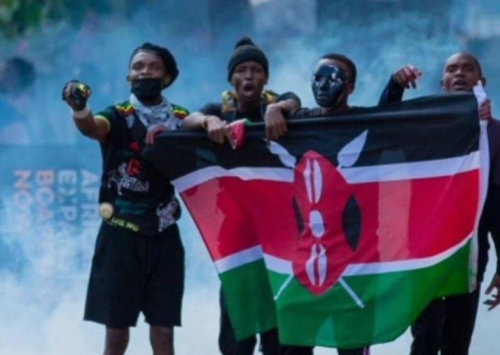
The emergence of Gen Z protests has shown that demands for accountability did not end with the generation of Kenneth Matiba, Charles Rubia, Raila Odinga and other pro-democracy figures.
Instead, a new generation has adopted the same principles using different tools.
Social media has replaced underground political mobilisation. Digital activism has replaced secret political meetings. Yet the demands remain strikingly similar: transparency, accountability, constitutionalism and responsible leadership.
The verdict
Saba Saba succeeded in changing Kenya’s political system. It did not complete Kenya’s democratic journey.
The movement secured multi-party democracy, constitutional freedoms and stronger institutions.
However, corruption, disputed elections, weak accountability, economic inequality, and recurring tensions over civil liberties continue to prevent the country from fully achieving the vision its pioneers fought for.
The true legacy of Saba Saba is therefore not that the struggle ended in 1990.
It is that every generation inherits the responsibility to defend democracy, demand accountability and ensure political freedom delivers tangible benefits to ordinary Kenyans.