Global Media Literacy Week: Wake-up call on fake news headlines this year’s edition
By Faith Lagat, October 25, 2025As the world grapples with the challenges of the digital era, Global Media and Information Literacy Week has turned the spotlight on one of the most pressing issues of our time: misinformation.
Initiated by the United Nations Educational, Scientific, and Cultural Organization (UNESCO), this year’s event (October 24–31, 2025), themed “Minds Over AI”, calls on people across the globe to think before they share.
In Kenya, where screenshots, edited videos, and unverified posts circulate rapidly on social media, the message could not be timelier.
UN calls for responsible sharing
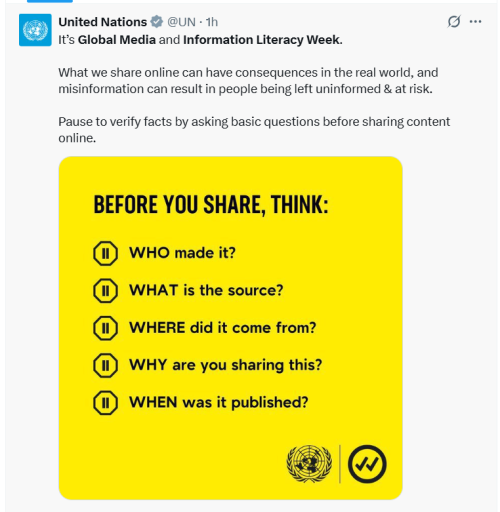
The United Nations kicked off the week with a message on X, urging users to verify content before reposting or forwarding it. “What we share online can have consequences in the real world, and misinformation can result in people being left uninformed and at risk,” the UN stated.
The post included a five-step checklist encouraging users to ask.
This global appeal comes at a time when Kenya’s digital space is more active than ever. Platforms such as X, WhatsApp, and TikTok dominate daily communication, often blurring the line between verified information and speculation. From viral political videos to misleading health claims, misinformation can quickly shape opinions and trigger public alarm.
During previous elections, for example, doctored images and false claims fueled divisions. In the health sector, unverified advice circulating online during the COVID-19 pandemic led some Kenyans to avoid vaccination. Such examples underline why fact-checking has become a civic responsibility.
AI deepfakes and the rise of misinformation
UNESCO’s theme “Minds Over AI” highlights the growing threat posed by artificial intelligence in spreading false content.
Deepfakes, manipulated photos, and synthetic voices are increasingly difficult to distinguish from authentic sources, making digital literacy essential.
Kenya’s growing internet penetration, especially among young users, has created both opportunity and risk. While online platforms have expanded access to information, they have also made it easier for misinformation to spread unchecked.
A 2022 report by the Stimson Center found that a “disinformation industry” exists in the country, where individuals and influencers are paid to circulate false narratives, particularly during election periods.
Experts say this trend erodes public trust in institutions and media, emphasizing the need for a population equipped with critical thinking skills.
Building a culture of verification
Developing a habit of verification can transform how information flows across communities. For instance, if a WhatsApp group member receives a forwarded message claiming new government taxes, they can pause and check the Kenya Revenue Authority’s official channels before sharing. Such small acts of caution help prevent unnecessary panic.
The checklist offers a practical framework for everyday use:
- Who made it? — Verify the credibility of the source.
- What is the source? — Determine if it originates from a trusted outlet or a random account.
- Where did it come from? — Identify whether the content is local or repurposed from elsewhere.
- Why are you sharing it? — Reflect on the purpose behind spreading it.
- When was it published? — Ensure the information is current and relevant.
Across Kenya, there is potential for collaboration between government agencies, schools, media houses, and civil society to enhance digital literacy. Community workshops and school programs can teach practical fact-checking skills, while partnerships with organisations such as UNESCO could expand awareness campaigns to rural regions where misinformation spreads fastest.
Global Media and Information Literacy Week serves as a reminder that the responsibility of fighting misinformation begins with individuals. By pausing to verify facts, Kenyans can play a role in fostering a more informed, responsible, and resilient society.
The UN’s message is simple but powerful: every post shared online has the potential to influence real lives. As the digital world grows more complex, media literacy is no longer optional; it is essential for truth, trust, and accountability.