Gachagua impeachment ruling: Why the judgement matters as former DP is set to learn his political fate
By Mustafa Juma, June 7, 2026All eyes will be on the High Court on Monday, June 8, 2026, when a three-judge bench delivers what could become one of the most politically consequential rulings in Kenya’s recent constitutional history: the judgement on the impeachment of former Deputy President Rigathi Gachagua.
The ruling by Justices Eric Ogola, Anthony Mrima, and Frida Mugambi is expected to determine whether Gachagua’s dramatic 2024 ouster from office met constitutional standards or whether Parliament violated due process in removing the country’s second-highest-ranking official.
But beyond the courtroom, the judgement carries implications far larger than one politician’s legal battle. It touches on the interpretation of constitutional safeguards, the balance of power between institutions, and perhaps most importantly, the future of Mt Kenya politics ahead of the 2027 General Election.
Constitutional questions before the court
At the heart of the case are several critical constitutional issues.
One of the most contentious concerns revolves around whether Gachagua was accorded a fair hearing during the impeachment proceedings.
His legal team has consistently argued that the process became fundamentally flawed after the former Deputy President was hospitalised on the final day of Senate proceedings, claiming he was effectively condemned without being able to adequately defend himself during the decisive stage of the process.
The court will therefore have to determine whether the Senate proceedings met the constitutional threshold for procedural fairness under Articles governing impeachment and fair administrative action.
The judges are also expected to address concerns raised over public participation during the National Assembly process.
Petitioners challenging the impeachment argue that the public participation exercise conducted before the impeachment vote was rushed, inadequate, and failed to meet constitutional standards requiring meaningful citizen involvement in major state processes.
The Kindiki question
Another politically sensitive issue before the court concerns the legal status of Deputy President Kithure Kindiki.
If the court finds the impeachment unconstitutional, questions may emerge regarding the legality of the succession process that elevated Kindiki to the Deputy President’s office.
However, Gachagua’s revised petition appears strategically crafted to avoid triggering an immediate constitutional crisis.
Unlike earlier legal arguments that appeared focused on reinstatement, the former DP’s current position is largely centred on nullifying the impeachment itself, restoring his political eligibility, and pursuing salary compensation and damages.
This legal shift suggests Gachagua’s broader focus may now be political rehabilitation rather than immediate return to office.
Why the ruling matters politically
While the legal questions are complex, the political implications are even bigger.
Gachagua remains one of the most influential political figures in the Mt Kenya region despite his impeachment.
His fallout with President William Ruto dramatically reshaped political alliances within Kenya Kwanza and triggered intense succession politics in Central Kenya.
A ruling in his favour would likely provide him with significant political momentum heading into the 2027 elections, allowing him to claim vindication and potentially reassert himself as a central player in opposition realignments or regional kingpin politics.
On the other hand, if the court upholds the impeachment, it could weaken his legal and political standing, though it is unlikely to completely erase his influence within sections of the Mt Kenya electorate.
The Supreme Court factor
Regardless of the outcome, few observers expect the matter to end at the High Court.
The losing side is almost certain to appeal the judgement, potentially setting the stage for a prolonged constitutional battle that could eventually land before the Supreme Court.
That means Kenya could continue witnessing legal and political uncertainty surrounding the impeachment well into the pre-2027 election period.
Gachagua has already hinted at plans to appeal the judgement should it not favour him.
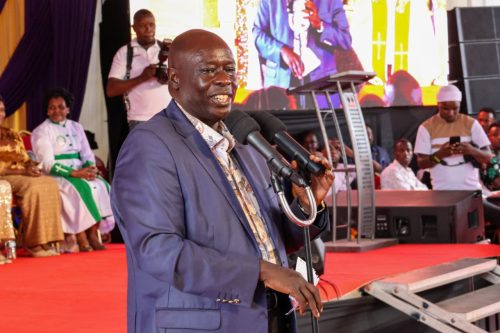
Speaking at a church service in Ol Kalou on Sunday, June 7, 2026, Gachagua said he was ready for any outcome.
“Kesi imesikizwa, uamuzi ni kesho. Si mtaniombea? Mtuombee, and we are ready for any outcome. If the three judges rule that we were treated unfairly and against the law and the constitution and lift the impeachment and let us be, we shall be grateful to God,” Gachagua said.
“I have confidence that our judiciary is independent and will give justice to Rigathi Gachagua and millions of his supporters across the country. If the ruling goes the other way, it is still okay. We still have the opportunity to go to the court of appeal.”
The appellate process may also produce landmark constitutional interpretations on impeachment standards, parliamentary powers, public participation, and the removal of senior state officers.
A test for constitutional democracy
Beyond personalities and political rivalry, the Gachagua case represents a broader test for Kenya’s constitutional order.
Impeachment is one of the most powerful tools available to Parliament, but its use must balance political accountability with constitutional safeguards against abuse.
The court’s ruling will therefore be closely scrutinised not only for its political consequences but also for what it says about the maturity of Kenya’s democratic institutions.
Whether the judges uphold or overturn the impeachment, the decision is expected to shape future impeachment processes, redefine political accountability standards, and influence how constitutional disputes involving senior state officers are handled in Kenya.
For Rigathi Gachagua, however, the stakes are deeply personal and political.
The ruling could either revive his political trajectory or force him into a far more difficult path toward rebuilding influence after one of the most dramatic political downfalls in Kenya’s recent history.