From football commentary to vitendawili: How Raila’s words united Kenyans
By Kenneth Mwenda, October 17, 2025Raila Odinga’s political campaigns were never ordinary. They were full of humour, song, riddles, and metaphors that brought politics closer to the people.
From his famous vitendawili moments to football commentaries on the campaign trail, Raila turned rallies into conversations that mixed laughter and lessons.
At every major rally, the crowd waited for his familiar call: “Kitendawili!” Thousands would shout back, “Tega!” meaning set it! Then came the riddle, often loaded with political meaning.
Also watch: Mutula Kilonzo Junior: Politics will never be the same again, but Raila fought for this Nation
In one of his memorable moments, in 2017, he said, “Kuot Ogwal ok mon dhiang’ modho pi,” a Luo proverb meaning “The grumbling of a frog does not stop a cow from drinking water.”
On June 25, 2017, in Busia, he left the crowd in laughter with a riddle laced with sharp political humour”
“Kitendawili… Tega! Alikimbia usiku uchi akachoka akalala fo fo fo. Alipoamka asubuhi alipata aibu kubwa. Yeye ni nani? Yeye ni nani? Yeye ni nani?… Mmeshindwa. Mnipatie mji… Busia… Huyo ni mchawi, huyo ni Jubileee. Miaka nne wamelala fofofo.”
That witty style became his signature. The riddles were not just jokes; they were coded messages about politics, patience, and persistence. In many ways, vitendawili made Raila’s rallies feel like home. Listeners were not just an audience; they were part of the exchange.
Raila na mpira
But Raila also understood modern crowds. In 2017, he gave his political speeches a football twist. During rallies, he would take the microphone and start commentating as if he were calling a live match. One of the crowd’s favourites was this:
“Pande ile Uhuru ameanza, amepatia Ruto, amepatia Duale, Duale na mpira, anampira Duale amepatia Kindiki, Kindiki na mpira, anaenda na mpira Kindiki, amerudishia Uhuru, amepiga shoot, mpira imeenda nje.”
Also watch: Raila Odinga as Prime Minister: Achievements and friction with Kibaki
“Mpira inarudi tena. Inashika upande hii na Weta, Weta anapiga kule kwa Isaac Rutto, Isaac Rutto anaenda, amechenga William Ruto, amechenga mpaka William Ruto ameanguka chini. Inaonekana William Ruto ameanguka chini na ameumia. Ameteguka mguu. Lakini mpira unaenda mbele.”
“Pande ile Isaac Rutto tena. Amekata mpirra pande ile kwa Musalia Mudavadi, Mudavadi anaenda na mpira, na mpira, amechenga Duale, amechenga Duale, anapatia Kalonzo, Kalonzo na mpira, na mpira Kalonzo, anapatia Raila pande ileee gooaal!”
Football was close to Raila’s heart, and he knew how deeply Kenyans loved the game. By using football commentary, he compared politics to a match, one with tactics, fouls, goals, and surprises. It showed his humour, but also his clever ability to connect politics with daily life.
Inawezekana
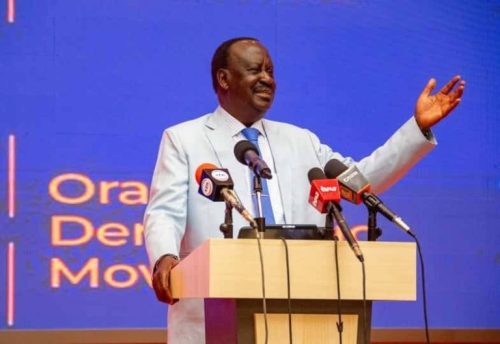
In 2022, his slogan “Inawezekana,” Swahili for “It is possible,” became a message of hope. It painted a picture of a Kenya where change could happen. The slogan appeared on billboards, campaign songs, and T-shirts. During rallies, he often mixed Inawezekana with another popular line, “Leo ni Leo,” meaning “Today is the day.” It added energy to his message and made supporters feel that victory was within reach.
Music also played a big role in his campaigns. Songs such as Leo ni Leo and Baba the Fifth carried his vision in rhythm and verse. His use of music turned rallies into celebrations. People danced, sang, and felt part of something larger than politics.
Kibaki tosha
In 2002, Raila changed Kenya’s politics with three powerful words, “Kibaki Tosha.” At a rally in Uhuru Park, he endorsed Mwai Kibaki as the opposition’s joint candidate, a move that united parties and ended KANU’s long rule. The phrase became a national cry of hope, repeated in villages, buses, and markets. It showed Raila’s influence and his belief in putting the country first.
Punda amechoka
By 2013, Raila had turned his campaign into a protest against corruption and poor governance. His slogan “Punda Ametchoka,” “The donkey is tired,” spoke directly to millions of struggling Kenyans. It was his way of saying the people had carried the burden for too long. The phrase became a symbol of frustration, but also a call for change.
Tibim and Tialala
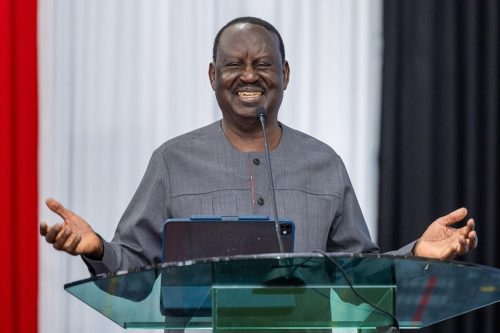
In 2017, the campaign trail exploded with youthful energy. The chants “Tibim!” and “Tialala!” borrowed from the student movement and popularised by Babu Owino became part of Raila’s rallies. He embraced them with ease, turning political speeches into rhythm and call-and-response sessions. The words had no fixed meaning, but they carried emotion, excitement, defiance, and unity.
Hayaaa
Across all elections, “Hayaaa!” remained Raila’s signature call. He would shout it into the microphone, and the crowd would instantly fall silent, ready to listen. It was part of his rhythm, a way to command attention without raising tension. To his supporters, that single word felt like a signal, that something important was about to be said.
Beyond entertainment, his choice of words built a connection. Many Kenyans felt seen and heard in his speeches. As the country mourns Raila Odinga, many remember not only what he stood for but also how he spoke.