Explainer: How NTSA’s new minor traffic offences system will work
By Aloys Michael, May 29, 2026The National Transport and Safety Authority (NTSA) has unveiled a new enforcement framework for minor traffic offences that will fundamentally change how motorists in Kenya are fined and prosecuted.
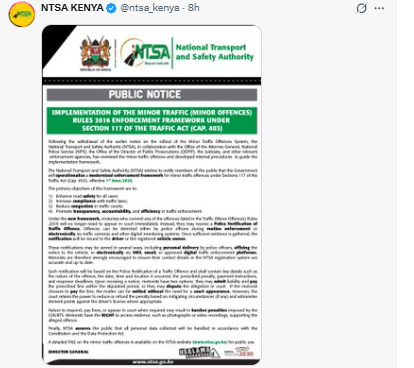
According to a public notice issued jointly with the Office of the Attorney General, the National Police Service (NPS), the Judiciary and the Office of the Director of Public Prosecutions (ODPP), the new system will take effect on June 1, 2026.
The notice states that the framework is being introduced under Section 117 of the Traffic Act (Cap 403) and is aimed at modernising traffic law enforcement across the country.
NTSA says the reforms are intended to enhance road safety for all users, increase compliance with traffic laws, reduce congestion in traffic courts, and promote transparency, accountability, and efficiency in traffic enforcement.
Under the new framework, motorists accused of minor traffic offences will no longer be required to appear in court immediately after committing an offence. Instead, they may receive what NTSA calls a Police Notification of Traffic Offence.
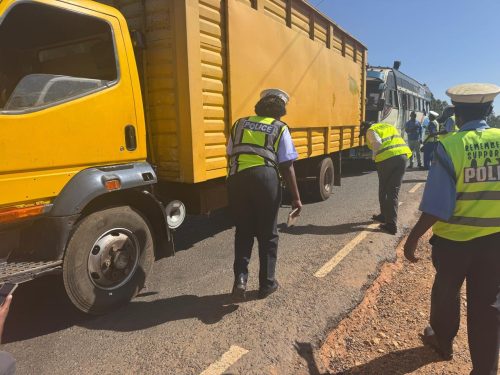
The authority explains that offences may be detected either physically by police officers during routine enforcement operations or electronically through traffic cameras and digital monitoring systems.
Once sufficient evidence is gathered, the notification will be issued either to the driver or the registered vehicle owner.
NTSA says the notices may be delivered through several channels, including personal delivery by police officers, affixing the notice to a vehicle, or electronically through SMS, email, and approved digital traffic enforcement platforms.
The notice further explains that each notification will contain critical details such as the nature of the offence, the location and date it occurred, prescribed penalties, payment instructions and response deadlines.
Motorists who receive the notifications will have two options. They can either admit liability and pay the prescribed fine within the stipulated period or dispute the accusations in court. NTSA emphasises that where a motorist chooses to pay the fine, the matter can be settled without the need for a court appearance.
However, the authority warns that failure to respond, pay fines or appear in court when required could attract harsher penalties imposed by the courts.
Importantly, NTSA also reassures motorists that they will retain the right to access evidence supporting alleged offences, including photographs and video recordings captured by enforcement systems.
The agency is now urging motorists to update their contact details in the NTSA registration system ahead of the rollout of the digital enforcement framework in 2026.