Do by-election victories signal UDA’s strength or is it just an illusion?
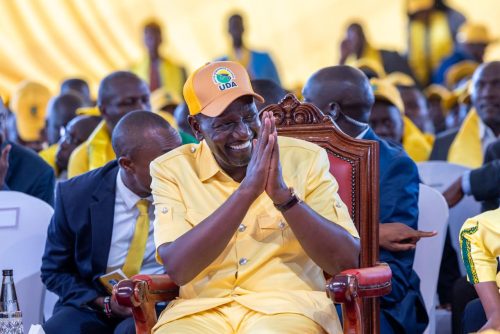
By Ndiritu Wanjiru, February 28, 2026The United Democratic Alliance (UDA) has boasted of its political superiority through the recent by-elections in Kenya to validate its political dominance in the coming 2027 general elections.
Celebrating the win in the by-elections held in Isiolo South Constituency, West Kabras Ward of Kakamega, and Evurore and Muminji Wards of Embu, which strengthens its organisational capacity to support voters and mobilise and does not lose seats in a contest.
“We are firmly on course to building a solid national political party whose vision goes beyond generations as we move Kenya to the first world. Congratulations, Tubi Mohammed (Isiolo South Constituency), Elphas Kainanga Shalakha (West Kabras Ward), Duncan Muratia Nyaga (Evurore Ward) and Peterson Njeru (Muminji Ward), for your victory and the confidence the people have shown in you,” Ruto noted.
Why UDA’s “Strength” Is Overstated
On paper, these victories create the perception of a strong and uninterrupted political machine of President William Ruto, the reason why the strength of UDA is exaggerated. Nonetheless, such successes do not always indicate the reality of politics in the country. The problems of localisation, weaker turnout, and incumbency and proximity to the state are often predominant in by-elections as opposed to national popularity.
Even though UDA displayed organisational control in Isiola South, West Kabras, Evurore and Muminji, these single victories cannot be conclusively used to assess voter sentiment in the run-up to a high-stakes presidential contest, where turnout and scrutiny will increase in a much more substantive way.
The Internal Transformation of ODM
One of the biggest upheavals in the UDA story of destiny is the rise of a more assertive wing in the Orange Democratic Movement (ODM) by the Nairobi senator, Edwin Sifuna. The latter faction is a departure from accommodation politics and a move to face the ruling party head-on. Internal restructuring has helped ODM to reinvigorate parts of the party instead of undermining it, which has made it politically relevant again. The faction of Sifuna is also becoming more of a prospective foundation of a wider united opposition coalition, and the leaders have realised that ODM has continued grassroots networks, particularly in urban centres and western Kenya. This has the potential to change the political arithmetic, as it is likely to see the consolidation of the ODM base and new allies added.
Changing loyalties in voting blocks
What worries the UDA more is the increased campaign of the opposition in the areas of Mount Kenya and the Kisii regions, where Ruto and the ODM party secured support in 2022. The opposition leaders have conducted rallies in an attempt to tap into the increasing economic frustrations amongst the voters.
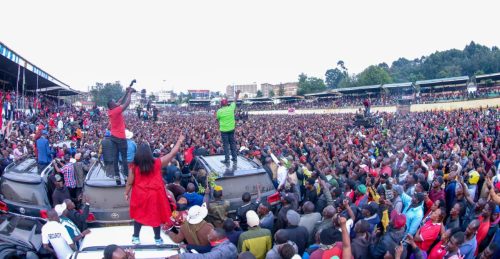
The increasing fears about the cost of living, joblessness, and expectations have provided platforms against which people can act. The regions are politically influential not only in their population but also in the past in relation to presidential results.
Anyone who erodes the support of UDA in these areas in a small part will radically change the 2027 electoral map.
Illusion over strength
The victories of UDA in the by-elections indicate an efficiency of operations of the group, though they could also give a false impression of security. The emergence of a resurgent ODM with strong leadership, the possibility of bringing together a common front and the moving political dynamics in the regions all suggest a much more competitive race in the future. It might have been a tactical victory to UDA in the by-elections, but strategically, there is no need to close the door as far as 2027 is concerned.