Digital revolution leaves millions behind as Africa races into AI era
By Lavender Kusimba, June 2, 2026As Africa embraces artificial intelligence, digital government services and technology-driven economies, disability rights advocates are warning that the continent’s digital revolution risks leaving behind more than 80 million people living with disabilities.
The concern dominated discussions at the 7th Inclusive Africa Conference in Nairobi on Tuesday, June 2, 2026, where government officials, technology companies, policymakers and disability advocates gathered to examine the growing gap between rapid digital innovation and accessibility.
While governments and private sector players celebrate technological progress, speakers at the conference argued that many digital products and services are still designed without considering the needs of persons with disabilities, creating new barriers to participation in education, employment, healthcare and financial services.
According to Irene Mbari-Kirika, Founder and Executive Director of inABLE, accessibility must become a central pillar of Africa’s digital transformation agenda rather than an afterthought.
“We’re here today to talk about digital inclusion for persons with disabilities because all these tech innovations that we see today, that we celebrate so much, are leaving out 15 per cent of the African population, which is over 80 million Africans,” she said.
Mbari-Kirika noted that exclusion often occurs in everyday digital interactions that many people take for granted.
“For example, someone who is blind might have to give their PIN number to someone else to transact on a mobile money application simply because that application was not designed with their needs in mind,” she explained.
The challenge extends far beyond mobile banking. During her keynote address, Mbari-Kirika revealed that a recent assessment of the home pages of ten leading African banks found critical accessibility failures in every institution reviewed.
“Every single bank had critical accessibility issues. That is the scale of the gap we are hoping to close,” she said.
Economic inclusion
The implications are not only social but also economic.
The World Bank estimates that excluding persons with disabilities costs countries between three and seven per cent of their Gross Domestic Product. At the same time, the combined spending power of persons with disabilities and their families globally exceeds $18 trillion annually.
These figures suggest that accessibility is increasingly becoming a business and economic issue rather than merely a social welfare concern.
“Digital accessibility is not a matter of charity or corporate social responsibility. It is a strategic business imperative. It belongs in the CEO’s office alongside discussions on growth, innovation, sustainability and revenue,” Mbari-Kirika emphasised.
Inclusive AI shapes future
One of the conference’s strongest messages centred on artificial intelligence. While AI is being promoted as a transformative force capable of driving development across Africa, experts warned that poorly designed systems could deepen existing inequalities.
“AI is an important tool that we are all using across the board, but it’s actually accelerating exclusion,” Mbari-Kirika observed.
She noted that AI also presents enormous opportunities if developed inclusively, citing innovations such as real-time sign language translation, live captioning and AI-powered navigation tools for visually impaired users.
For persons with disabilities, accessibility remains closely linked to independence and dignity.
Julius Mbura, Head of Advocacy and Legal at inABLE and a visually impaired advocate, said inaccessible digital platforms continue to lock many people out of critical services and information.
“When these platforms and systems are built without accessibility in mind, persons with disabilities are left out because we cannot access information or navigate different apps and websites,” he said.
Mbura argued that accessibility should be incorporated from the earliest stages of design and policymaking rather than added later.
“They should involve persons with disabilities from the get-go and use universal design,” he said, referring developers and policymakers to Kenya’s Digital Accessibility Standard, KS2952, which outlines accessibility requirements for websites, hardware and software.
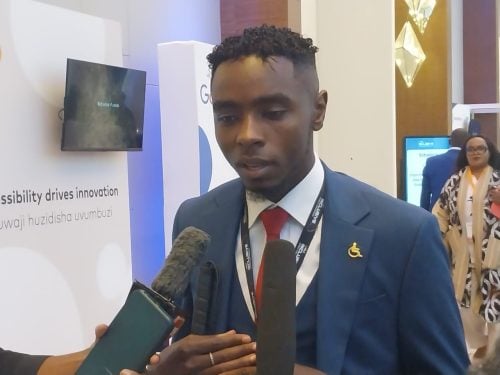
The Kenyan government says it is making progress toward a more inclusive digital economy.
Kabogo’s take
Information, Communications and the Digital Economy Cabinet Secretary William Kabogo said accessibility is a constitutional obligation and not merely a policy choice.
“We cannot speak of a successful digital economy while sections of our population remain unable to access the opportunities that technology creates,” Kabogo said.
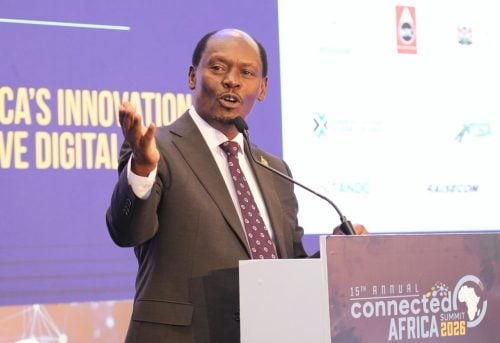
He highlighted government investments in digital infrastructure, including more than 30,000 kilometres of public connectivity infrastructure and over 270 digital hubs nationwide. Some of the facilities specifically serve learners who are blind, deaf and hard of hearing.
As Africa pushes forward with digital transformation and AI adoption, the debate is increasingly shifting from whether technology can drive development to who gets included in that future.
For advocates gathered in Nairobi, the answer lies in ensuring accessibility is embedded into every policy, platform and innovation from the start. Otherwise, they warn, Africa risks building a digital economy that is technologically advanced but fundamentally unequal.