Did violence cost UDA in Ol Kalou by-election?
By David Nthua, July 20, 2026Violence may have enlarged the United Democratic Alliance’s defeat in Ol Kalou. However, it cannot independently explain the landslide.
UDA’s Samuel Muchina Nyagah secured 5,450 votes, or 13.2 per cent. Ngotho won by 29,990 votes.
Ol Kalou had 73,480 registered voters. Only 41,656 voted, leaving 31,824 people, or 43.3 per cent, at home.
UDA would have needed 29,991 of those non-voters to overturn the result. That represents 94.2 per cent of everyone who stayed away.
The arithmetic confirms that violence was not the only factor. DCP had built a powerful political wave.

How the brain interprets violence
When people detect danger, brain systems involving the amygdala rapidly flag the threat.
Stress also changes how prefrontal and other decision-making networks assess risks and rewards.
Immediate safety can consequently become more important than a future political benefit.
Experiments have found that threat can increase risk avoidance and passive withdrawal.
One neuroscience study found that anxiety encouraged people to withhold actions that might expose them to harm.
This provides one possible explanation for why some Muchina supporters may have remained home. Voting was no longer judged only as a civic duty. It may have been interpreted as a physical risk.

Research covering 21 African electoral democracies also found that people who feared campaign violence were less likely to vote. Fear increased risk perception and political withdrawal.
Violence can also produce anger and defiance.
Some residents who did not initially support Ngotho may have viewed attacks on DCP supporters as an assault on their freedom. Voting for him could then become a way of defending political autonomy.
This is known as psychological reactance. People sometimes resist when they believe somebody is trying to control their choices.
That mechanism could have converted an ordinary by-election into a protest vote.
However, no exit poll has established how many Ol Kalou voters changed sides for this reason.
How security could have helped UDA
The government had launched roads, markets, housing, educational facilities, digital hubs and railway services in Ol Kalou.
A secure election would have allowed residents to judge the United Democratic Alliance (UDA) mainly on those projects.
Providing adequate security to the Democracy for the Citizens Party (DCP) leaders would also have projected confidence.
Ghana demonstrated this approach during its 2012 election.
The National Election Security Task Force deployed about 41,000 personnel across 26,002 polling stations.
Mobile teams patrolled violence-prone areas. A rapid deployment unit remained on standby.
Security officers also intervened after reports that political “macho men” intended to seize ballot boxes.
The measures deterred potential troublemakers and protected candidates, voters and electoral materials.
A post-election study credited the task force with helping deliver a peaceful contest.
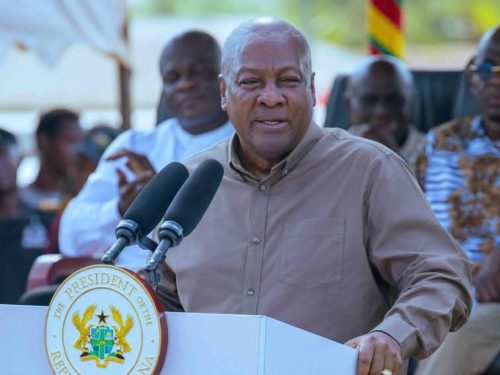
Incumbent President John Mahama still won with 50.7 per cent. Commonwealth observers described the election as credible.
The governing side retained power without denying the opposition security or political space.
Nigeria’s 2023 presidential election offered the opposite lesson.
European Union observers documented thuggery, intimidation and attacks on polling stations.
They also reported insufficient security presence and inadequate responses in some areas, including Lagos.
Despite the disorder, governing All Progressives Congress candidate Bola Tinubu lost Lagos, his political base. Labour Party candidate Peter Obi received 582,454 votes against Tinubu’s 572,606.
The EU report linked violence and weak security responses to suppressed participation.
Ol Kalou presented UDA with a similar danger.
Taking DCP complaints seriously, repelling goons and arresting their financiers would have weakened the resistance narrative surrounding Kamau Ngotho.
It may also have reassured Muchina Nyagah’s supporters who feared visiting polling centres. Undecided voters would then have remained focused on development.
Preventing violence would not have guaranteed UDA victory. The 29,990-vote margin was enormous.
However, impartial security could have improved UDA’s chances. It would also have denied DCP the political advantage of appearing targeted and unprotected.
The lesson is clear. A confident government protects its opponents. By doing so, it protects the credibility of its own candidate.