All eyes on Parliament as lawmakers return amid Finance Bill 2026 storm and deepening fuel crisis
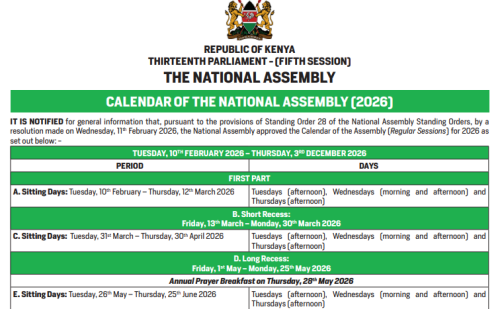
By Ndiritu Wanjiru, May 26, 2026The National Assembly and the Senate houses are set to resume work today, Tuesday, May 26, 2026, after a month-long recess, amid increasing public discontent on the issue of taxes, escalating cost of living and the prevailing fuel shortages, for which the Finance Bill 2026 is likely to be the focus of debate.
Fuel crisis
The core of the national debate is an escalating demand by the government to give a zero rating to fuel products, which many Kenyans say will help reduce the cost of transport and, consequently, the rising prices of essential commodities. The problem has rapidly emerged as one of the most politically sensitive topics the MPs are to discuss as they head back to the National Assembly.
The Finance Bill 2026 has already ignited many consumer, business, transport and civil society group grievances that the proposed tax measures will further deepen economic hardship for average Kenyans. Many Kenyans are now calling on MPs to seek to amend the levies directly to ease the burden on households during their debate time, without imposing other levies.
One of the most controversial issues is the tax policy for petroleum products. Numerous critics say that while crude oil prices fluctuate in the world market, multiple taxes still add fuel to the pump. Recent increases in transport fares and commodity prices nationwide have led to a surge in calls to exempt fuel taxes.
Planning on Finance Bill 2026
Planning around the Finance Bill 2026 is also likely to put pressure on Parliament. The National Assembly should start considering committees and public participation discussions right after resumption, before it comes to the floor for discussion of recommendations.
After the debate and vote on the bill, MPs are then expected to vote on the bill by the end of June so that it can be implemented with the 2026/2027 national budget, which begins on July 1.

The debate on the Finance Bill is likely to force legislators to be held to account in the public arena, particularly given the increased public discontent over the continuing surge in the cost of living. Kenyans will be watching keenly to see if MPs will play into the hands of citizens who want tax relief or affirm the government’s revenue collection policies to raise the national budget.
In addition to fuel taxes, Parliament will also be considering a range of proposals that have sparked concerns among the youth and small businesses that rely on technology and online work opportunities, such as proposals to tax mobile phones, propose digital economy taxes, and impose import duties.
The govt defends Finance Bill 2026
The National Treasury, led by CS John Mbadi, has championed the proposed fiscal measures, claiming that the government requires stable sources of revenue to finance development projects and cut down on borrowing. But critics say it’s increasingly on the shoulders of ordinary people facing unemployment and poverty.
The path to the upcoming general election in 2027 is already underway for the country, and the upcoming debate on the finance bill may have the potential of being a key turning point for Parliament. MPs should brace for more pressure from their voters, who will expect tangible, rather than political, solutions to economic problems and threats to their rhetoric.
As the lawmakers return to parliamentary activities, attention will focus on whether Parliament is able to make any significant contribution to the issue of fuel pricing and the economic issues that are on everyone’s mind.