Willis Otieno: You rarely see serious economies fight poverty through dishing cash
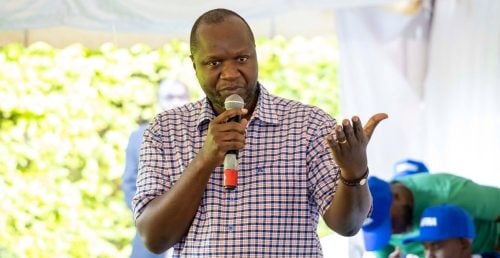
By David Nthua, July 12, 2026Good governance advocate Willis Otieno has opposed the politics of handouts in the name of empowerment.
Otieno wrote on X on Sunday, July 12, 2026, that serious economies do not fight poverty by distributing cash, wheelbarrows or sewing machines for political recognition.
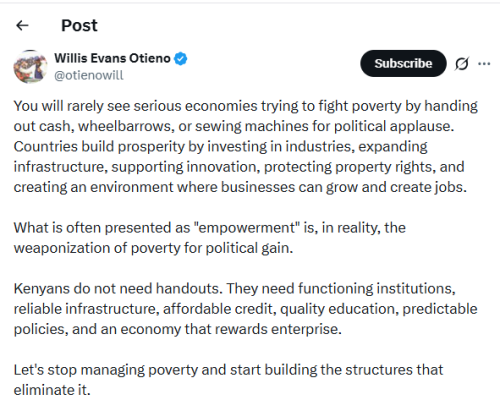
“You will rarely see serious economies trying to fight poverty by handing out cash, wheelbarrows, or sewing machines for political applause,” Otieno said.
He argued that governments should instead invest in industries, infrastructure and policies capable of creating sustainable employment and expanding economic opportunities.
“Countries build prosperity by investing in industries, expanding infrastructure, supporting innovation, protecting property rights, and creating an environment where businesses can grow and create jobs,” he stated.
Handout politics
Otieno said programmes presented as empowerment often fail to address the underlying causes of unemployment, inequality and poverty.
“What is often presented as ‘empowerment’ is, in reality, the weaponisation of poverty for political gain,” he wrote.
His remarks targeted the growing use of cash donations, equipment and household items during political and community meetings.
Otieno maintained that temporary assistance should not replace long-term economic planning capable of enabling households to generate a reliable income.
Building institutions
The governance advocate said Kenyans require strong institutions and an economic environment that supports enterprise rather than continued dependence on political handouts.
“Kenyans do not need handouts. They need functioning institutions, reliable infrastructure, affordable credit, quality education, predictable policies, and an economy that rewards enterprise,” Otieno said.
He called for a shift from short-term interventions towards structural reforms that could expand industries, support businesses, and create stable jobs.
“Let’s stop managing poverty and start building the structures that eliminate it,” he added.
Otieno’s position is that political empowerment programmes should be measured by whether they create sustainable livelihoods rather than the number of items or cash amounts distributed during public events.