Willis Otieno links fuel price hike to government debt pressures, not global shocks
By Sharon Atieno, June 16, 2026Lawyer Willis Otieno has linked the recent increase in fuel prices to mounting government fiscal pressures, arguing that debt servicing obligations rather than global geopolitical developments are the real driver behind rising pump costs.
Speaking on his X account on Tuesday, June 16, 2026, Otieno dismissed claims that the latest fuel price adjustments were mainly influenced by developments in the Strait of Hormuz, insisting that domestic financial constraints are playing a bigger role.
“When we told you that the fuel price increase had more to do with the government’s desperate search for revenue to service maturing debt obligations before the close of the financial year on 30th June, many dismissed it as speculation,” he said.
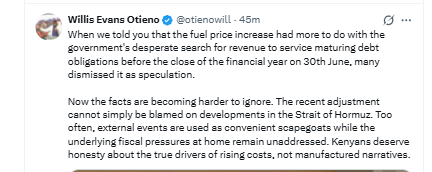
He added that emerging fiscal realities are making it harder to sustain external explanations for domestic economic challenges.
“Now the facts are becoming harder to ignore. The recent adjustment cannot simply be blamed on developments in the Strait of Hormuz,” Otieno said.
He argued that external events are often used as convenient explanations while underlying economic pressures remain unresolved.
Debt pressure driving economic strain, Otieno says
Otieno maintained that Kenya’s rising cost of living, including fuel prices, is being shaped by internal fiscal demands linked to debt servicing.
“Too often, external events are used as convenient scapegoats while the underlying fiscal pressures at home remain unaddressed,” he stated.
He further urged greater transparency in explaining the real causes of price fluctuations affecting Kenyan households and businesses.
Call for honesty on cost of living
The lawyer said Kenyans deserve clear and honest communication on economic decisions that directly affect their livelihoods.
“Kenyans deserve honesty about the true drivers of rising costs, not manufactured narratives,” he said.
Global oil easing offers mixed signals
His remarks come amid reports that easing tensions between the United States and Iran could stabilise global oil markets following a new peace agreement expected to reopen key shipping routes such as the Strait of Hormuz.
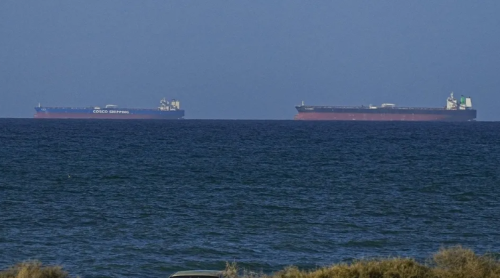
While international crude prices show signs of stabilising, analysts note that local fuel pricing continues to be influenced by domestic taxation, subsidies and import costs.