Willis Otieno blasts State House giveaways as empty political photo-ops
By Kiprono Keileb, August 11, 2025Political analyst and advocate Willis Otieno has strongly criticised the recent distribution of boda bodas and other giveaways, including sausage wheelbarrows, to Kenyan youth, calling them “cheap photo-op tokens” that do little to tackle poverty.
His remarks followed President William Ruto’s youth empowerment event at State House, Nairobi, on Saturday, August 9, 2025, where thousands of young people were given various items intended to boost their livelihoods.
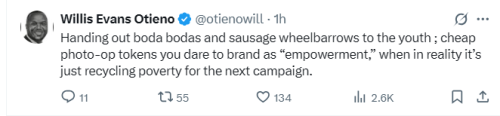
Taking to his official X account on Monday, August 11, 2025, Otieno dismissed such giveaways as recycled gestures that serve political interests rather than genuine empowerment.
“Handing out boda bodas and sausage wheelbarrows to the youth; cheap photo-op tokens you dare to brand as empowerment, when in reality it’s just recycling poverty for the next campaign,” Otieno said.
His criticism reflects mounting frustration among youth leaders and citizens who contend that short-term handouts fall far short of addressing deep-rooted challenges like unemployment, inadequate skills, and limited access to capital.
Conversely, Saturday’s event at State House, Nairobi, was a landmark occasion for many of its beneficiaries.
Thousands of young people from all over Nairobi gathered at the presidential residence to receive farming equipment, boda bodas, and small business tools.
For some, it was their first-ever invitation to the State House, many calling it a symbol of inclusion and recognition by the government.
In the video that circulated online, many youths were their first time in the state house, calling it a new beginning. Others expressed optimism that the items they received would help them start or expand their small businesses, creating income for their families.
Some beneficiaries also noted the peaceful atmosphere during the event, with many describing it as a sign of unity and hope.
However, the challenge remains in ensuring these handouts translate into sustainable economic opportunities. Critics like Otieno insist that long-term solutions should focus on skills training, access to affordable credit, and creating jobs rather than distributing assets without proper follow-up.
The lingering question is whether these giveaways have the power to truly break the cycle of poverty facing Kenya’s youth, offering them sustainable opportunities and long-term empowerment, or if they are simply a display of political theatre designed to win hearts and minds in the run-up to elections. While the government says empowerment is a priority, voices like Otieno’s urge caution and demand more lasting strategies.