Which way ODM? How UDA by-election triumphs exposed orange party’s waning popularity ahead of 2027 polls
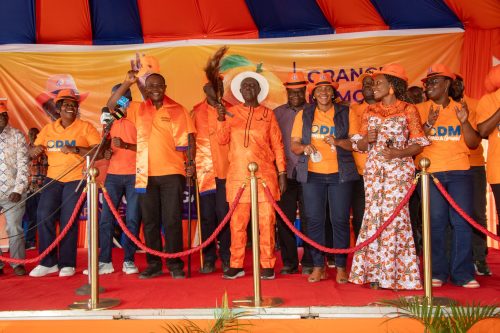
By Aloys Michael, February 27, 2026The February 26, 2026, by-elections have left the Orange Democratic Movement (ODM) facing an uncomfortable question: which way next?
The mini-polls, conducted by the Independent Electoral and Boundaries Commission (IEBC), saw the ruling United Democratic Alliance (UDA) sweep all four contested seats, one parliamentary position and three Member of County Assembly (MCA) posts.
Beyond the numbers, however, the results exposed deeper political currents that could shape the 2027 general election amid shifting grounds in favour of the united opposition, who are already bolstering their battalions ready to fire in the 2027 showdown.

Instead, Jubilee, under its Deputy Party Leader Fred Matiang’i’s stewardship, is emerging as the new rallying point.
In a season defined by elite pacts, tactical confusion and loud propaganda, Matiang’i represents the one variable Ruto has struggled to neutralise: competence fused with regional credibility.
Recent political trends reinforce that perception. On November 27, 2025, pro-Matiang’i candidates swept all three by-elections in Nyamira’s Nyamaiya, Nyansiongo, and Ekerenyo wards, a decisive signal that his political brand resonates locally.
The victories rattled both ODM operatives and UDA allies, some of whom have publicly dismissed the momentum as temporary.
Ground slippery
The broader opposition calculus is equally strategic. Former Deputy President Rigathi Gachagua, now leader of the Democracy for Citizens Party, maintained the importance of strong regional bases in negotiating national power.
“Mobilisation for bargaining edge must start with each principal’s base. Elaborate consultations in Mt Kenya led to the formation of DCP,” Gachagua said.
“It is only through a strong home base that one can negotiate presidential ambitions effectively. Mt Kenya is a unique voting bloc with interests only understood by its sons and daughters.”
UDA still?
UDA’s most emphatic win came in the Isiolo South constituency, where Mohamed Tubi clinched victory with 7,352 votes, overwhelmingly defeating his closest challenger.

The seat had fallen vacant following the death of former MP Mohammed Tupi, but the by-election quickly evolved into a litmus test of party strength in northern Kenya.
The decisive margin not only reinforced UDA’s growing presence in the region but also showed its efficient grassroots mobilisation machinery as ODM pushes for zoning and the DP seat as a pre-election bargain ahead of the General Elections.
West Kabras blow
But it was in West Kabras Ward in Kakamega County that the political shockwaves were most profound. Traditionally viewed as ODM’s backyard, the ward delivered a stinging rebuke to the Orange party.
UDA candidate Elphas Shalakha garnered 3,317 votes to win the seat, while ODM’s candidate managed a paltry 30 votes, an outcome that stunned observers and highlighted the party’s waning grassroots grip in western Kenya.
For ODM, the result was more than a local setback. It symbolised a party grappling with internal rifts, factional tensions, and declining enthusiasm among its traditional support base.
Once dominant across vast swathes of western Kenya and beyond, ODM now finds itself on the defensive.

Internal disagreements, shifting alliances, and uncertainty over its 2027 strategy have created a perception of drift at a time when its main rival appears focused and aggressive.
While by-elections are often shaped by hyper-local dynamics, sweeping losses, especially in perceived strongholds, carry national implications.
They can dampen morale, embolden rivals, and reshape coalition talks ahead of a general election.
UDA’s by-election triumphs project an image of consolidation and momentum. ODM’s struggles, on the other hand, raise urgent questions about renewal, unity, and political strategy.
If the February 2026 mini-polls are any indication, the battle lines for 2027 are already being drawn.
For ODM, the path forward will require introspection and recalibration, while for UDA, the victories offer both confidence and a platform to expand further.
The question lingering in Kenya’s political arena remains: can ODM reinvent itself in time, or are these by-election results a preview of a deeper realignment ahead of 2027?