Sifuna dismisses Mudavadi’s claim on difficulty of removing sitting president
By Mustafa Juma, August 15, 2025Nairobi Senator Edwin Sifuna has strongly refuted remarks by Prime Cabinet Secretary Musalia Mudavadi, suggesting that it is difficult to remove a sitting president in Africa.
Speaking on Friday, August 15, 2025, at the Law Society of Kenya (LSK) Annual Conference 2025 in Kwale County, the Orange Democratic Movement (ODM) Secretary General praised Supreme Court Judge Isaac Lenaola and his colleagues, led by former Chief Justice David Maraga, for their historic 2017 decision to annul a presidential election.
Comparison with other countries
The decision, Sifuna said, proved that Kenya was different from many African countries where incumbents hold onto power at all costs.
“Justice Lenaola painted a true picture of who we are as a country. Some leaders claim that in Africa it’s hard to remove a president seeking a second term, but they forget that here in Kenya we have shown it can be done,” Sifuna said.
Sifuna further dismissed comparisons with other nations, particularly Uganda, stressing that Kenya’s democratic structures and independent institutions have set it apart.
“We are not Uganda. When Kenyans decide, all the bravado you see will end,” he added, calling on citizens to trust in their power to change leadership through the ballot.
Mudavadi’s claims
Earlier this month, Mudavadi expressed strong confidence in President William Ruto’s re-election prospects in 2027.
Speaking during Malava’s Teachers Engagement on Tuesday, August 5, 2025, Mudavadi used the example of Kenya’s past presidents to support his point that Ruto will easily be re-elected for a second term in 2027.
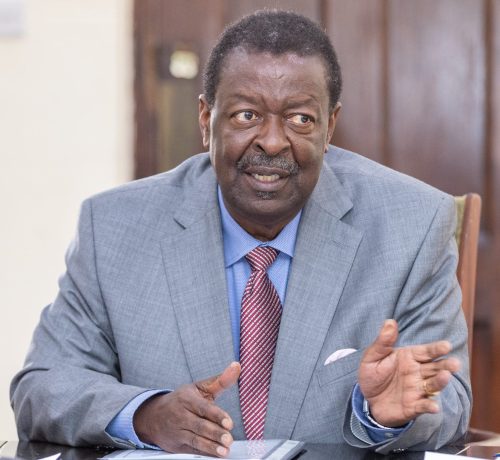
“I’ve been telling people it’s usually so difficult on African soil to defeat a president who is looking for his second term. Kenya’s second president, Moi, calculated he had one more term under the new constitution at that time. People thought it was not possible for Moi, but he manoeuvred and won. Then Kibaki came in in 2002, because Moi was no longer on the ballot, and he won. Because Kibaki had won in 2002 without any challenge, and again in 2007, he won,” Mudavadi claimed.
“After this, Uhuru came in and won the first term; this was followed by another win, his second term, which ended in 2022. As you can see, defeating a sitting president in Africa is so difficult.”
To support his assertion, Mudavadi highlighted Ruto’s commitment to making tough, long-term decisions to address Kenya’s economic challenges, such as stabilising finances amid rising inflation and public debt, prioritising infrastructure development, and supporting job creation and social empowerment programmes.