Senator Ledama warns governors of accountability even after leaving office
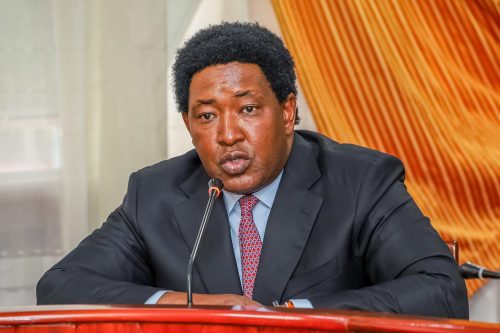
By Kenneth Mwenda, March 31, 2026Narok Senator Olekina has warned that county governors would face consequences for mismanagement, even after leaving office.
In a strong address to the Senate, on Tuesday, March 31, 2026, he urged senators to exercise their constitutional powers decisively, arguing that failure to act now would render oversight meaningless.
“Mr. Speaker, I have listened to the report carefully, and when I think about what is happening today with governance, I want to remind all of us that we have so much power, yet most of us do not utilise the power that we have,” the senator said. He called on lawmakers from both sides of the House to revisit the constitutional powers available to them and apply them fully. “The time is now, Mr. Speaker,” he added.
Senator Olekina accused the Council of Governors (CoG) of attempting to protect officials from accountability by presenting their decisions as a collective mandate.
“What is happening today is that there is a club called the Council of Governors who are attempting to overthrow this government. They are attempting to define their unity not as intergovernmental cooperation, but as collective impunity,” he said.
He highlighted the rapid wealth accumulation of some governors.
“Some of them used to live in apartments in Parklands and Pangani, but are now driving luxury vehicles and living in manicured mansions. Yet when you ask them to account for public funds, they hide behind the Council of Governors,” he said.
The senator reminded the House that accountability is not optional.
“If I appear before the Senate, it will now be seen as if I am going against a collective duty,” he said. He urged colleagues to review Sections 18 and 19 of the Parliamentary Powers and Privileges Act and Articles 125 and 226 of the Constitution, which empower the Senate to summon witnesses, enforce compliance, and act against non-compliance.
‘Let’s not send money to the counties’
He criticised proposals to give governors 30 extra days to respond to Senate summons, arguing that such delays give room for impunity.
“The time is now for us to utilise the tool, which is the most powerful tool that we have,” he said.
“We failed to pass the Division of Revenue Bill. We failed to pass CRA. Let’s not send money to the counties if they cannot account for that money. That is the only time that will ensure accountability in this country.”
The senator emphasised that the consequences of mismanagement extend beyond tenure in office.
“The fact is, when they leave office, the day they leave office, immediately, Article 2265 will follow them,” he said, referring to the constitutional provisions that allow accountability for former officeholders.
He also stressed that responsibility should extend beyond governors to other senior county officials, including the Chief Finance Officer.
“Most of them will tell you, we are still waiting for direction from the governor. Why are you making someone so powerful, yet you are powerful? Unless you become powerful and you exercise the power that you have, you will be rendered useless,” he said.
Police operation sparks tensions
The senator’s remarks came amid heightened tensions between the Senate and the CoG following an attempted police operation to arrest Nairobi Governor Johnson Sakaja on March 30, 2026. CoG Chair Ahmed Abdullahi condemned the action, describing it as “unwarranted use of force,” and emphasised that the governors’ decision not to appear before the Senate’s County Public Accounts Committee (CPAC) was collective.
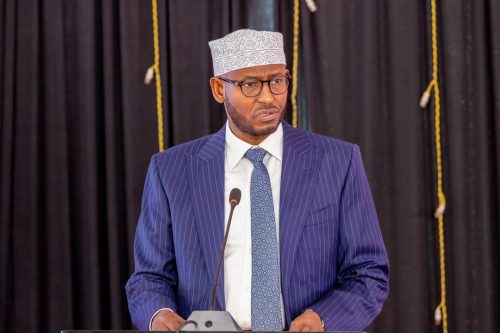
“The council of governors notes with utmost concern the actions by the office of the inspector general of police in what appears to be an unwarranted exercise of force in the attempt to arrest Nairobi Governor Johnson Sakaja,” Abdullahi said. He warned that arresting governors under these circumstances would “defeat the intent of oversight, deepen mistrust, and undermine the rule of law.”
Nairobi Governor Sakaja also defended his absence from CPAC, saying he acted on guidance from the CoG.
“The issue at hand is not a personal matter concerning Governor Sakaja Johnson, but one that is being handled collectively by the Council of Governors,” he said. Sakaja argued that disputes should be resolved institutionally, rather than through actions targeting individual governors.