Ruto details plan for Safaricom, Kenya Pipeline sale proceeds
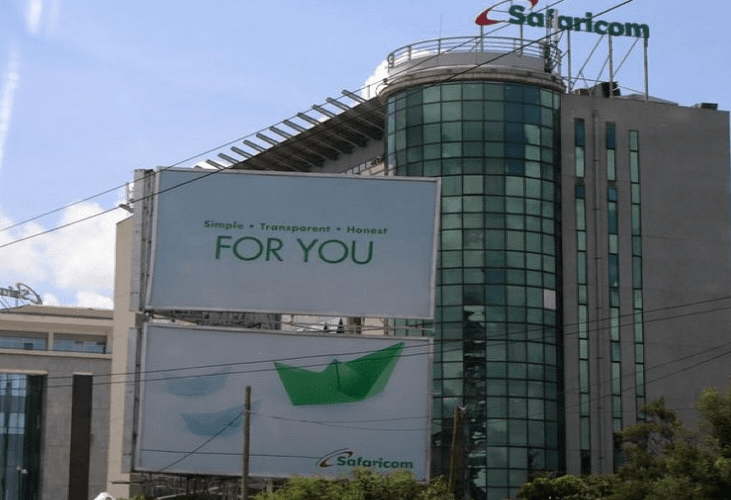
By Aloys Michael, February 17, 2026President William Ruto has revealed that funds raised from the privatisation of government stakes in Safaricom and Kenya Pipeline Company (KPC) will help finance research and innovation in Kenyan universities.
The proceeds from the planned share sales, he said, are expected to boost research and development capacity, support technological advancement, and strengthen higher education institutions across the country.
Speaking on Tuesday, February 17, 2026, during a graduation ceremony at National Intelligence and Research University (NIRU), the Head of State said the government had issued firm policy directions to ensure that funds realised from asset sales directly support the country’s long-term development agenda, particularly through investment in human capital and innovation.
“Our human capital. Even at the moment as we undertake our privatisation process, I have given clear instructions to the Ministry of Finance that part of those proceeds will go to all the areas we have mentioned,” Ruto stated.
“But some percentage must go to the research fund so that our universities, including this university, can apply for resources so that we can build and create new knowledge for us to be able to transition our country to a first-world country.”
In his address, the President noted that research funding would form a mandatory allocation within the broader framework guiding utilisation of privatisation proceeds, positioning higher education institutions at the centre of Kenya’s socio-economic transformation strategy.
This comes a day after the public hearings on the proposed sale of a 15 per cent government stake in Safaricom PLC have concluded, with Parliament’s finance team shifting attention to a new legislative framework intended to ringfence proceeds for infrastructure development.
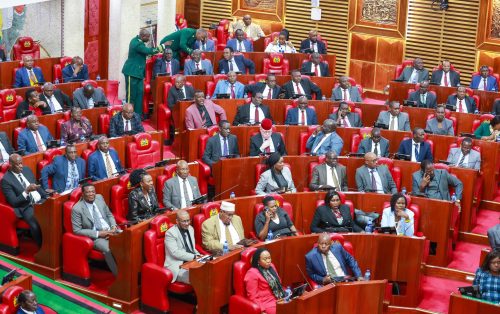
The nationwide exercise, anchored on Sessional Paper No. 3 of 2025, saw the Departmental Committee on Finance and National Planning and the Select Committee on Public Debt and Privatisation traverse 30 counties to collect public views.
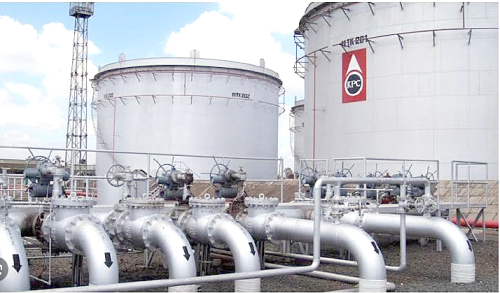
The final forums were held in Kwale and Kilifi counties over the weekend, marking the end of a process that has drawn intense scrutiny amid concerns over the sale of the 15 per cent share.
In a statement on Monday, February 16, 2026, after wrapping up the hearings, Committee Chairperson Kuria Kimani assured participants that their submissions would inform the House report.
“We are delighted that across the 30 counties that we have visited, the members of the public have come out to candidly give their views on what direction they wish the Safaricom divestiture process to take. Your views are not in vain, and they will enrich our report to the House,” he said.
While a majority of contributors signalled conditional support for the transaction, the dominant theme across counties was the need for safeguards on the utilisation of proceeds. Many participants warned against channelling funds into the Consolidated Fund without a dedicated accountability structure.
“I support this move since accelerated infrastructure development will not occasion increasing of taxes or lead to higher borrowing. However, we do not want the proceeds directed to the Consolidated Fund as there will no way to ascertain what the proceeds were used for,” Charles Nyaga said during the Embu forum.
Fiscal policy
The concerns echo historical anxieties about public finance management and come as the government seeks to balance fiscal consolidation with infrastructure expansion.
Proponents argue that a partial divestiture would unlock capital for catalytic projects without increasing taxes or public borrowing. Critics counter that without ironclad oversight, the one-off windfall could dissipate without delivering long-term economic returns.
In response to these fears, Parliament has introduced the National Infrastructure Fund Bill, 2026. The proposed law seeks to establish a dedicated fund to receive proceeds from privatization and disposal of state assets, as well as allocations approved by Parliament.
The Bill was read for the first time on February 12, 2026, clearing the way for public participation.