Robert Mbui claims MPs avoid Parliament over fear of taking sides on govt agenda
By Kenneth Mwenda, June 18, 2026Kathiani Member of Parliament Robert Mbui has said that some MPs deliberately avoid Parliament during key debates because they fear openly taking sides on government proposals.
Speaking during a morning radio interview on Thursday, June 18, 2026, Mbui said Parliament often appears less active, not because MPs are absent but because many are uncomfortable publicly supporting or opposing controversial government policies.
He said the public sometimes gets the impression that the House is empty, yet MPs are physically present but reluctant to participate fully in debates.
“Sometimes it seems a bit difficult. And you mentioned a situation where it seems as though that might be the problem. If there is one person sitting in the corner and another one here, it means the House is not full and that there are very few who are debating something as important as this,” he said.
Mbui explained that the challenge goes beyond attendance. He argued that political pressure influences how MPs behave during debates, especially on sensitive bills such as the Finance Bill 2026.
He said some MPs support government positions privately but avoid expressing their real views in the House.
“There are Members who avoid being in the House because some support the government agenda, others do not want to openly oppose it on the floor, and some who deep down do not even agree with what the government is proposing but still support the government,” Mbui said.
“Yeah. So you find the number; I mean, out of 349 members, you know, you might. Yesterday’s motion was taken with about 50 members in the house.”
Debate on Finance Bill 2026
His remarks come a day after a heated parliamentary sitting in which the Finance Bill 2026 passed its second reading amid strong political divisions.
According to parliamentary proceedings reported on June 17, 2026, MPs from both the ruling coalition and opposition camps clashed over the contents of the bill, particularly on taxation measures affecting ordinary Kenyans.
The debate exposed deep divisions in the National Assembly, with the Kenya Kwanza side defending the bill as a necessary fiscal reform tool, while opposition MPs accused the government of introducing hidden taxes.
Majority Leader Kimani Ichung’wah defended the bill, saying it did not impose punitive taxes.
“This Bill is not imposing any taxation that may be harmful to Kenyans,” Ichung’wah said during the debate.
Finance Committee Chairperson Kimani Kuria also dismissed claims that the bill targeted mitumba traders or mobile phone users with new taxes.
“There is no taxation on mitumba. Ignore any propaganda on the increase of taxes on mitumba,” Kuria said.
However, opposition MPs strongly disagreed. Mbui himself opposed the bill on the floor of the House, calling it harmful to ordinary citizens.
“I rise to oppose this draconian, punitive, knee-on-the-neck-of-Kenyans Finance Bill 2026,” Mbui told Parliament.
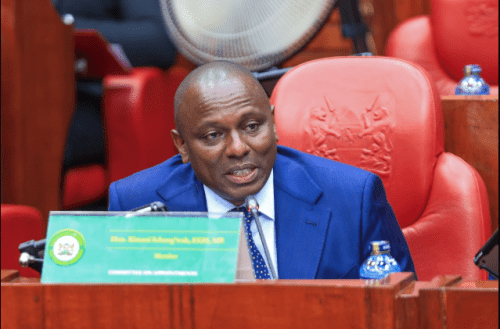
MPs divided over Finance Bill voting process
Mbui also raised concerns about how voting and debate are handled in Parliament. He said the timing of votes and the sudden closure of debate reduce proper scrutiny of legislation.
He argued that MPs often leave the House because voting times are not predictable.
“Sometimes it is 12:40 pm and almost lunchtime. You leave to go for lunch or a meeting, and then suddenly someone rises and says. Let’s stop debating and put the question. In ten minutes, an important bill has passed with very few members present,” he said.
Mbui said such practices weaken accountability and reduce the quality of lawmaking.
He proposed that Parliament should set clear timelines for voting to ensure full participation.
“If I were to officiate over the House, I would make it clear that as debate proceeds, we are heading towards the tail end, so members prepare for voting. In other Parliaments, they do that,” he said.
Concerns over transparency and voting
Mbui also addressed concerns about transparency in voting, saying MPs should not hide their positions from voters.
“I want the people to know my vote every single time. There is never a time my vote has not been known because I first articulate my position. I support or I oppose,” he said.
He added that MPs have a responsibility to represent voters honestly, even when the issues are politically sensitive.
He cited past votes on taxation as an example, saying he has consistently opposed tax increases when he believes they burden citizens.
“I opposed the proposal and voted against it because I felt the people who sent me to Parliament had already expressed themselves,” Mbui said.
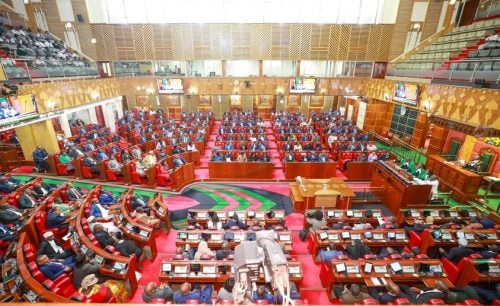
Finance Bill debate fuels political tension
The Finance Bill 2026 debate has taken place against a backdrop of growing political tension in the country.
Reports from Parliament show that MPs have been sharply divided over whether the Bill introduces new taxes or simply reforms the tax system.
A section of lawmakers has defended the bill, arguing that it improves efficiency in tax collection and broadens the tax base rather than increasing tax rates.
Others, however, argue that the Bill hides new taxes in technical language that may still increase the cost of living.
Opposition MPs also warned that rushed passage of the Bill could lead to public anger, similar to the protests witnessed during the Finance Bill 2024 crisis.
That earlier crisis led to widespread demonstrations and eventually forced the government to withdraw the bill after public pressure.