Reuben Kigame condemns Kalonzo’s political neutrality
By Mustafa Juma, September 4, 2025Gospel musician and politician Reuben Kigame has faulted Wiper Patriotic Front Party leader Kalonzo Musyoka over what he termed as political neutrality.
Speaking on Wednesday, September 3, 2025, during an interview with a local TV station, Kigame described Kalonzo as a long-time friend and a man of strong faith but expressed disappointment with his role in the National Dialogue Committee (NADCO).
Betrayal of the nation
According to Kigame, the NADCO report was a betrayal of the nation.
“Kalonzo is my friend; we share a lot in common except for his neutrality. For example, I did not like all that NADCO stuff because that was a betrayal to the nation,” Kigame said when he was asked about his views on Kalonzo.
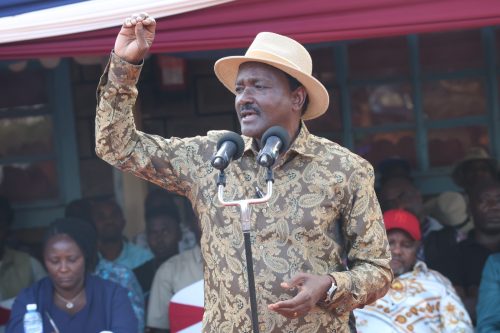
He, however, acknowledged Kalonzo’s steadfastness in matters of faith and highlighted their shared history dating back to their early years.
“He is a good man, at least more solid in faith. We have a lot of history in terms of our early days,” Kigame said.
Kalonzo’s role in NADCO
In March 2024, Kalonzo faulted the High Court for halting the implementation of the NADCO report.
Kalonzo, who was also the NADCO co-chair, termed the orders by Lady Justice Dora Chepkwony as state-sponsored.
“This is a deliberate scheme to go against what was agreed on at the Bomas of Kenya. The Kenya Kwanza regime has never had goodwill and faith, and this is the problem in Kenya: the politics of lies all the time. This state-sponsored court action must stop,” Kalonzo said.
According to the 2022 Azimio la Umoja-One Kenya coalition party co-principal, the state was not committed during the dialogue.
Kalonzo spoke during the funeral service of Priscilla Muendi Mbula in Mwananyamala, Lunga Lunga constituency in Kwale County.
Before the court halted the implementation of the NADCO report, eight bills had been referred to the National Assembly’s Departmental Committee on Justice and Legal Affairs (JLAC) and the Senate Standing Committee on Justice, Legal Affairs and Human Rights.
The two committees were given 45 days to consider the said bills and table a report in the house for either adoption or rejection.