Nyakera: New KRA tax rules threaten businesses and jobs
By Kenneth Mwenda, February 4, 2026Former Kenyatta International Convention Centre (KICC) chairperson Irungu Nyakera has criticised the Kenya Revenue Authority (KRA) for its aggressive enforcement of income tax, saying the move risks hurting businesses and ordinary Kenyans.
According to Nyakera, the new taxman measures will majorly affect businesses and the job market sector.
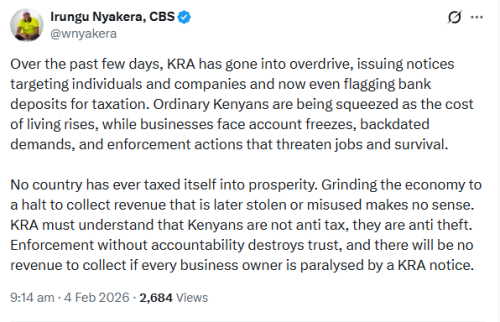
“Over the past few days, KRA has gone into overdrive, issuing notices targeting individuals and companies and now even flagging bank deposits for taxation,” Nyakera posted on X on Wednesday, February 4, 2026.
“Ordinary Kenyans are being squeezed as the cost of living rises, while businesses face account freezes, backdated demands, and enforcement actions that threaten jobs and survival.”
“No country has ever taxed itself into prosperity. Grinding the economy to a halt to collect revenue that is later stolen or misused makes no sense. KRA must understand that Kenyans are not anti-tax; they are anti-theft. Enforcement without accountability destroys trust, and there will be no revenue to collect if every business owner is paralysed by a KRA notice,” he added.
Nyakera’s warning comes as KRA implements major changes to how it checks income tax returns. From January 2026, the authority began validating every figure declared in returns against real-time electronic data. The system uses the Electronic Tax Invoice Management System (eTIMS), withholding tax records, and customs import data to cross-check declared income and expenses at the point of filing.
Previously, taxpayers submitted annual returns that KRA reviewed later through audits or queries. This process allowed room for explanations. Under the new system, validation happens instantly, leaving little room for adjustment after submission.
All income now verified
The new rules apply to all taxpayers, including companies, partnerships, sole proprietors, professionals, Turnover Tax payers, and landlords. Expenses without matching, compliant eTIMS invoices face automatic disallowance unless they fall under specific legal exemptions.
KRA compares declared income against eTIMS and withholding data and uses the higher figure to identify undeclared income.
Salaried Kenyans with side businesses must now declare all income in one return, including freelance, consultancy, online services, and farming earnings. Filing salary alone does not give an accurate tax position.
Employees should use their P9 form and include any additional income earned during the year. Individuals without formal employment must declare all income not already covered under the Turnover Tax regime.
The authority published a notice in November 2025 confirming the new approach.