Ndindi Nyoro calls for national introspection on Finance Bills and tax policy
By Faith Lagat, June 16, 2026Kiharu Member of Parliament Ndindi Nyoro has called for a national conversation on the effectiveness of Finance Bills and taxation measures, arguing that successive revenue-raising policies have not delivered the expected outcomes despite being presented annually as tools for improving government revenue collection.
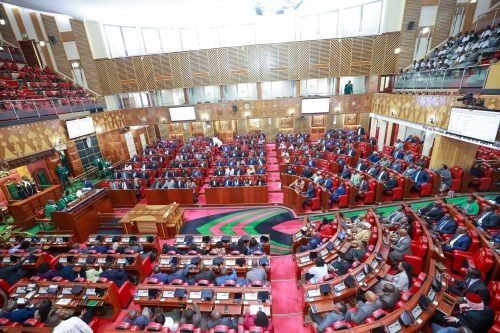
Speaking in the National Assembly on Tuesday, June 16, 2026, Nyoro criticised the handling of the Finance Bill 2026, saying lawmakers were not given sufficient time to review the document before debate commenced.
“I want to start by first bemoaning the fact that the Finance Bill, as it is, was actually published on the Order Paper slightly before the session, and clearly this was an ambush to Members of Parliament,” he said.
“But I want to thank the Members for turning up to defeat the treachery that had been planned.”
Calls for data-driven review
Nyoro urged Parliament and the country to examine the impact of previous Finance Bills using available revenue data rather than relying on projections and policy promises.
“As a country, we need to undertake introspection. We have always had Finance Bills every single year, and what are we told each time? That it is about tax administration and raising more revenue, but let us use data,” he said.
Referring to the Finance Bill 2024, which generated significant public debate and protests, Nyoro questioned whether the measures introduced had resulted in a noticeable increase in government revenue.
“The most heated Finance Bill was in 2024, and the leaders of this House are on record as saying that even when Kenyans rejected it, they still went ahead and implemented it.”
“But the question is this: what did the country achieve? I have looked at the revenue graph of this country for the last 20 years, and there is nowhere you see a bump that can be attributed to the revenue-raising measures contained in the Finance Bill.”
Treasury Cabinet Secretary John Mbadi however, defended the Finance Bill 2026, dismissing anticipated protests as politically motivated and not based on the contents of the Bill.
Speaking on a podcast on June 10, 2026, Mbadi said he conducted 17 public participation forums across the country before drafting the proposals and maintained that measures, including the proposed 5 per cent tax on profits from the mitumba trade, were developed through stakeholder consultations.
He argued that the Bill aims to improve Kenya’s tax-to-GDP ratio and strengthen revenue collection, while rejecting claims that it is punitive or ignores public concerns.
Tax relief concerns
The MP also raised concerns about government commitments that have not been reflected in legislative proposals, specifically referencing remarks on exempting low-income earners from Pay As You Earn (PAYE).
“And Kenyans are dismayed. We have seen different pronouncements from the same Government addressing the same issue. We have seen the Head of State talking about the exemption of PAYE for Kenyans earning below Ksh30,000; that has not been captured here.”
“These kinds of roadside declarations are what we need to bring to an end.”
Nyoro argued that lower-income workers require relief amid rising living costs and increased household expenses.
“Kenyans earning below Ksh30,000 deserve a reprieve, especially when their pockets are being raided from every direction.”
His remarks came during ongoing parliamentary consideration of the Finance Bill 2026, which contains a range of tax and revenue measures proposed by the National Treasury for the upcoming financial year.