MP Julius Rutto says Kenya lacks financial room for major fuel price cuts
By Mustafa Juma, May 19, 2026Kesses Member of Parliament (MP) Julius Rutto has cautioned that Kenya’s current fiscal position does not allow for significant reductions in fuel prices.
Speaking during an interview with a local TV station on Tuesday, May 19, 2026, Rutto warned that drastic cuts could strain development spending and disrupt ongoing public projects.
The United Democratic Alliance (UDA) lawmaker said the government is operating within a “very tight and delicate balance” between cushioning citizens and sustaining development programmes.
Rutto noted that discussions within government on fuel pricing have revealed limited financial flexibility, arguing that any major downward adjustment would have wider economic consequences.
“What the cabinet secretaries are saying and what Mbadi is saying, we are so lean space that any other alteration far below there, it means that we either make fuel cheap and stop development,” he said.
He warned that reducing fuel prices significantly could negatively affect funding for infrastructure projects, particularly road construction, which he said also supports employment.

Impact on development and jobs
The legislator emphasised that roadworks and related infrastructure projects play a key role in job creation, especially for local communities.
He cautioned that cutting fuel prices without a clear financial buffer could slow down or halt such projects, affecting employment opportunities across the country.
“…and you see now, that will be another trouble to the employment that comes around, especially on roadworks,” he added.
Balancing act on fuel policy
Rutto further stated that the government is trying to strike a balance between easing the cost of living and maintaining fiscal responsibility.
He described the situation as a “very tight and delicate balance,” indicating that fuel pricing decisions are constrained by broader budgetary realities.
Fuel prices under scrutiny
His remarks come amid heightened national debate over fuel prices, taxation, and the cost of living, with various leaders and stakeholders calling for reforms to ease pressure on households and businesses.
The ongoing transport sector strike in parts of the country has further intensified scrutiny of government policy on energy pricing and public finance management.
Talks to find a solution on Monday, May 18, 2026, ended in a dramatic confrontation between government officials and transport sector stakeholders during a live press briefing on the ongoing fuel crisis.
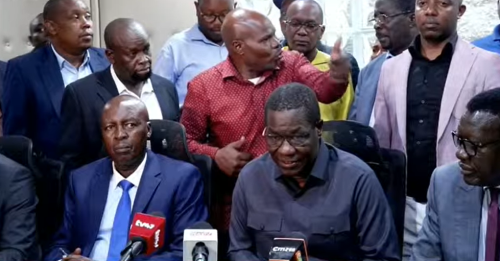
The heated exchange occurred after transport operators publicly contradicted Energy Cabinet Secretary Opiyo Wandayi over claims that an agreement had been reached following talks aimed at resolving the nationwide transport strike.
The disagreement unfolded moments after CS Wandayi briefed journalists on the outcome of the discussions, explaining that the government had agreed to narrow the gap between diesel and kerosene prices to address concerns over fuel adulteration.
However, a representative from the matatu sector openly challenged the government’s version of events during the live press conference, insisting that no meaningful agreement had been reached.