Martha Karua criticises MPs who missed Finance Bill voting session
By Faith Lagat, June 21, 2026People’s Liberation Party (PLP) leader Martha Karua has criticised the National Assembly following the passage of the Finance Bill 2026, questioning the absence of a large number of MPs during the vote.
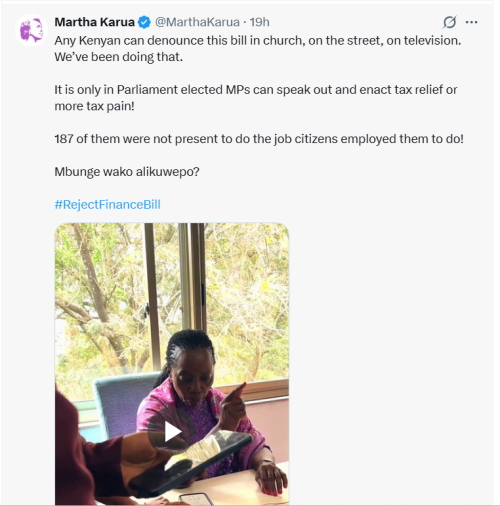
In a post on X on June 20, 2026, Karua noted that a significant number of legislators did not participate in the vote despite its implications for taxation and public finance.
“187 of them were not present to do the job citizens employed them to do! Mbunge wako alikuwepo?” She further emphasised that while citizens express their views through protests and public forums, Members of Parliament are mandated to debate and make decisions on legislation affecting taxation and public expenditure,” she said.
The Finance Bill 2026 forms part of Kenya’s Ksh4.8 trillion national budget for the 2026/27 financial year. It was passed at the Third Reading stage on Thursday evening, June 18, 2026 with 122 votes in favour and 40 against, with no abstentions recorded. Only 162 out of 349 MPs participated in the vote.
Parliamentary vote and government defence
The voting process was presided over by Speaker Moses Wetangula, who announced that the Ayes comprised 103 electronic votes and 19 manual votes, while the Nays included 36 electronic and 4 manual votes.
Government officials defended the legislation, stating it did not introduce punitive taxation measures. Majority Leader Kimani Ichung’wah maintained that the bill was structured to avoid burdening citizens with harmful taxes. Finance Committee Chairperson Kuria Kimani also rejected claims that the legislation imposed new taxes on mitumba traders or mobile users.
The National Assembly reportedly received more than 100,000 public submissions during the consultation period, reflecting widespread national interest in the proposed tax measures and fiscal policies.
Opposition reaction and public discourse
Opposition leaders strongly opposed the Bill during and after its passage. Former Deputy President Rigathi Gachagua described the vote as a “defining moment,” urging legislators to reject policies he said could negatively affect citizens.
Wiper Party leader Kalonzo Musyoka also criticised the process, stating that MPs were elected to represent wananchi and not act as a rubber stamp, warning that voters would judge their performance in the 2027 elections.
Kiharu MP Ndindi Nyoro explained his absence during the vote, citing international engagements. He acknowledged public concern over attendance and defended his previous participation in fiscal debates, while also pointing to procedural challenges affecting parliamentary oversight.
President William Ruto cautioned against disruptions linked to protests, urging that schools, businesses, and economic activities continue without interruption.
The passage of the Finance Bill 2026, coupled with concerns over absenteeism and renewed political tensions ahead of commemorations linked to the 2024 Gen Z protests, has intensified public debate on parliamentary accountability and representation.