Inside Ruto’s 2-month plan to raise Ksh2.5T for National Infrastructure Fund
By Aloys Michael, February 20, 2026President William Ruto has unveiled an ambitious plan to raise Ksh2.5 trillion for Kenya’s National Infrastructure Fund (NIF) within just two months.
They have also questioned the Cabinet’s plan to create a limited liability company to house the Fund, with many insisting the government should focus on reducing inefficiencies.
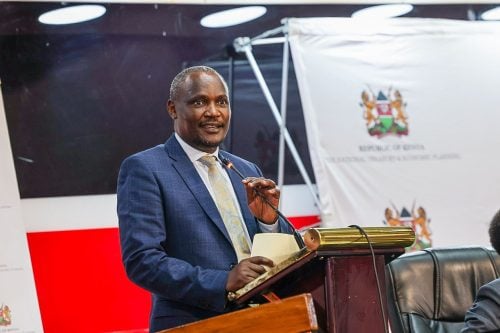
However, Treasury Cabinet Secretary John Mbadi defended the Cabinet’s proposal, denying claims that public money would be directed to a private entity.

“I have heard people say we are creating a private entity. This is not a private entity. This is going to be a limited liability company. Not all limited liability companies are private companies,” Mbadi said.
At the same time, the High Court had temporarily stopped the implementation of the National Infrastructure Fund following a constitutional petition challenging its legality.
This was after Margaret Gikenyi, J Benjamin, Eliud Matindi and two others filed a petition challenging its implementation, claiming that it violated the Kenyan constitution.
Justice Bahati Mwamuye at the Milimani Law Court granted a conservatory order stopping the government from proceeding with the fund.
“Pending the inter parties hearing and determination of the Petitioners/Applicants’ Notice of Motion Application dated 16/12/2025, a conservatory order be and is hereby issued restraining the Respondents, jointly and severally, and whether directly or through their employees, servants, agents, or related entities; from establishing, incorporating, registering, operationalizing, funding, or howsoever otherwise giving effect to the impugned National Infrastructure Fund,” the judge stated.
They argue that the fund was created unlawfully through a State House communiqué, rather than through legislation passed by Parliament as required by the Constitution.
The petitioners contended that public funds can only be established by an Act of Parliament, warning that allowing the fund to proceed would amount to executive overreach and undermine constitutional safeguards on public finance.
Another issue that was raised is the government’s plan to register the fund as a Limited Liability Company (LLC).
Concerns over fund’s legality
They argued that this structure would place trillions of shillings outside parliamentary oversight and beyond the routine audit mandate of the Auditor-General, creating what they describe as a “shadow treasury.”
The petition also raises concerns about transparency, public participation, and the risk of unchecked financial mismanagement.
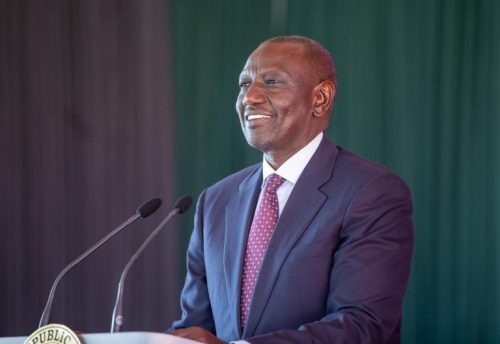
But Ruto, against the pushback, speaking on Friday, February 20, 2026, at a Methodist Church Leadership event at State House, said the government aims to mobilise half of the Ksh5 trillion target by April.
“We have already started the journey to obtain Ksh5 trillion, and by God’s grace, and by the fourth month of this year, we would have raised half of that money,” the president said.
The remaining Ksh2.5 trillion is expected to be raised gradually over the next ten years, underlining the NIF as a structured, long-term investment rather than a short-term fix.
Unlike previous financing strategies, Ruto stressed that the plan will avoid adding to Kenya’s already heavy debt burden, currently standing at Ksh12 trillion.
Instead, the government will explore market-driven avenues, including partial privatisation of state-owned enterprises such as Kenya Pipeline Company and East Africa Portland Cement, which could generate an estimated Ksh350 billion upfront.
Ruto also signalled plans to tap into institutional capital from pension funds, insurance companies, and international development finance institutions.
“We are shifting away from traditional debt and taxation toward an investment-led, market-driven model,” he said.
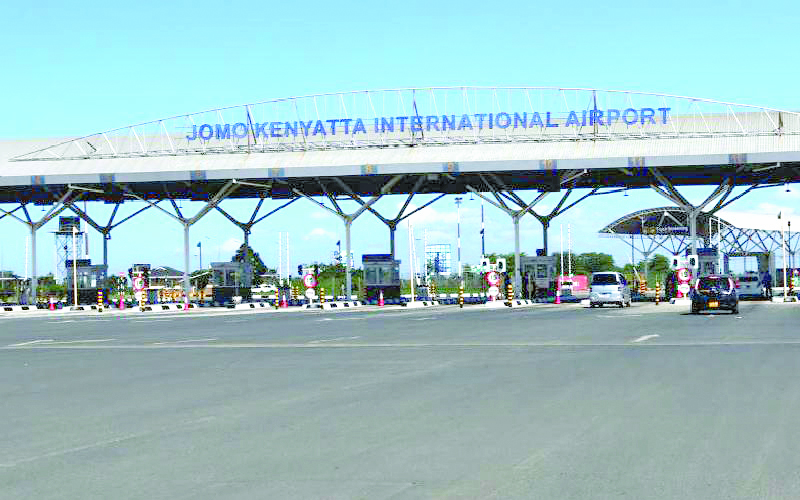
The NIF is expected to finance flagship infrastructure projects critical to Kenya’s regional competitiveness, including the expansion of the Standard Gauge Railway (SGR) to Malaba and the modernisation of Jomo Kenyatta International Airport (JKIA).