Advertisement
IEBC’s bid to change poll rules rejected
Wednesday 08th June, 2022 12:13 AM|
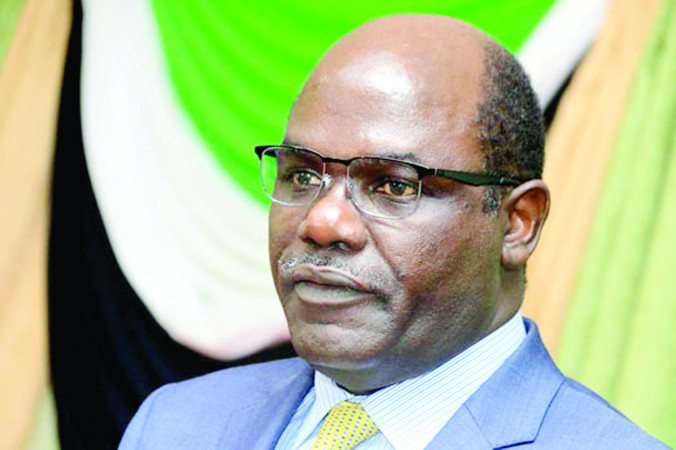
The Independent Electoral and Boundaries Commission (IEBC) yesterday suffered a major blow after a House committee rejected proposed election regulations with just 62 days ahead of polls.
IEBC had intended to use the rules to guide the conduct of the August 9 election to ensure it complied with a 2017 Supreme Court ruling that declared the first presidential election null and void.
In its majority ruling, the court, whose President at the time was Chief Justice David Maraga, gave a raft of recommendations on how the electoral commission could conduct free, fair, credible and verifiable presidential elections and transmit the results transparently.
Commission chairperson Wafula Chebukati had moved to Parliament asking MPs to approve the amendments on laws dealing with registration of voters, voter education, party nominations, party lists and use of technology in transmission of results so as to comply with that ground-breaking ruling.
However, the Delegated Legislation Committee yesterday threw out the recommendations, leaving the commission exposed should the results of August presidential polls be challenged.
In its findings tabled in Parliament yesterday, the committee led by William Kamket noted that some of the proposed regulations did not conform with the Constitution and the elections Act, 2011 and therefore could not be effected.
“Further, the IEBC may not have adhered to the statutory timelines and the House may need to extend time if it has to allow deliberations on the regulations,” said the committee in its report, which was tabled before the House is prorogued next week.
Chebukati had submitted the regulations for consideration by the National Assembly as required by law but now finds his hands tied against the background of the Judiciary piling pressure on IEBC to ensure it respects earlier court rulings in its conduct of elections.
While submitting the proposals, IEBC had warned that unless Parliament enacted or amended some laws on the conduct of elections and transmission of presidential results, the country could be staring at the possibility another nullification of presidential election results.
“We are shooting ourselves in the foot,” IEBC chief executive Marjan Marjan had said about delays in approving the proposals at a past interview. “These are amendments that must be adopted in conformity with the Supreme and High Court rulings, otherwise I can foresee a repeat of 2017. Time is not on our side to continue dilly-dallying.”
His warning, however, has now been heeded in the breach, just days after the two leading presidential contenders Raila Odinga and William Ruto raised questions about the IEBC’s preparedness to deliver credible elections.
IEBC has in the past been particularly concerned that Parliament had not passed a law that would allow alternative means of transmitting presidential results in the event that electronic transmission failed.
The current law provides that only electronic transmission is allowed. This mode that posed a major challenge in the 2017 election due to failure of technology in some regions. This failure was one of the grounds cited in the nullification of the first presidential results and led the court to order a repeat in October of that year.
Raft of amendments
IEBC had also proposed a raft of amendments to the Elections Act that could allow it to put “contemporary mechanisms for identification of voters and transmission of the elections results” at its disposal. The agency had sought amendments to Section 39, which focuses on the handling of Form 34 A which the Supreme Court concluded should be used to declare presidential election results.
According to a source within IEBC, the idea was to have Form 34A carefully handled by Presiding Officers at polling stations and signed by all agents before being relayed directly to the national tallying centre in form of an image. The national presiding officer was to receive the image and retain it for verification to ensure that the electronic Form 34A corresponded with the physical copy delivered by constituency returning officers. Where discrepancies were noted, the electronic image was to be considered as the correct and primary document. This was aimed at reducing the possibility of an electoral officer tampering with the results.
The Supreme Court nullified the last presidential election after it found that there had been illegalities, irregularities and lack of transparency which the IEBC blamed on failure of technology, hence its quest to change the rules and regulations to comply with the ruling.
For instance, IEBC wanted results forms from polling stations delivered psychically as opposed to being sent electronically as an image. The commission argued that the country was not fully covered by mobile phone network sufficient to allow electronic transmission of results.
Section 109 (3) of the Elections Act provides that the power to make regulations shall be exercised only after a draft of the proposed regulations has been approved by the National Assembly at least four months preceding a General-Election, and further that the commission publish the regulations approved by the National Assembly in the gazette notice not later than 60 days before the date of the General Election. The latest date for passing such changes was June 10, meaning that MPs have run out of time with just two days to the deadline.
Findings
In its findings, the Kamket committee said:“Whereas the commission is required to present a public participation report on regulations due to competing election programmes and activities, the regulations are yet to be subjected to public participation”.
It also observed that most of the regulations contained drafting errors that went against the spirit of the Constitution, and recommended that this be corrected before the rules can be published.
“Having considered the glaring areas, the committee resolves to recommend to the House to adopt the report recommending not to approve the five sets of regulations for contravening the Constitution,” Kamket said.
Author
Anthony.Mwangi
View all posts by Anthony.MwangiLatest News




Advertisement
More on Inside Politics