Fanya Mambo criticises Kenya’s education system over poor leadership and school conditions
By Ndiritu Wanjiru, June 8, 2026Lawyer and political analyst Fanya Mambo Kinuthia has raised concerns over the state of Kenya’s education system, arguing that public schools are increasingly becoming a reflection of leadership disconnect, poor prioritisation, and widening inequality.
Speaking in an interview with a local radio station on Monday, June 8, 2026, Kinuthia has lamented what he described as the loss of dignity for learners in public schools, saying the system has been left to deteriorate while leaders make decisions that do not reflect their lived realities.
“There is no dignity for our students in schools. If all public servants took their children to public schools, maybe things would improve faster. Leaders prescribe what they don’t consume,” Kinuthia said.
Long-standing debate
His remarks touch on a long-standing debate in Kenya about the quality gap between public and private education and whether political leaders are sufficiently invested in strengthening public institutions that serve the majority of citizens.
Kinuthia also directed his criticism at the leadership of the Ministry of Education, accusing those at the helm of being out of touch with the challenges facing learners and teachers on the ground.
“We have terrible leadership at the helm of the Ministry of Education, and they are not in touch with the problems our children are going through. Our children need someone who can be empathetic,” he added.
The political analyst further questioned national spending priorities, arguing that misallocation of funds has worsened the crisis in education infrastructure. He pointed to large-scale projects and questioned their opportunity cost in relation to basic learning needs.
“When you have a billion, you have a thousand classrooms,” Kinuthia said, using the statement to underscore the scale of what he believes are missed opportunities in public spending.
He added that resources spent on prestige projects could have had a more direct impact on education outcomes.
“What we wasted in one stadium in Wajir could have reduced congestion in classrooms,” he noted.
Unrest linked to mounting exam pressure
Fanya Mambo’s statement has come at a time when the government, through the basic education principal secretary Julius Bitok, has urged school administrators to rethink how learners are assessed, as the government attributed the ongoing wave of student unrest and school fires across the country to mounting examination pressure.
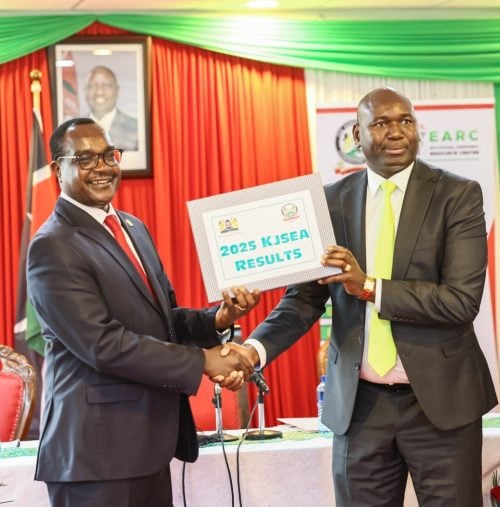
Speaking during a presser on Saturday, June 6, 2026, Bitok said some internal school assessments, particularly mock examinations, are contributing to tension among students.
“There are some mock examinations that are creating tension in our schools. We have asked the boards of management and the school management to reconsider, even postponing the mock exams temporarily to ensure that students do not riot,” Bitok said.