Eugene Wamalwa opens up on internal cracks that Killed Azimio coalition
By Mustafa Juma, June 23, 2026Democratic Action Party–Kenya (DAP-K) leader Eugene Wamalwa has lifted the lid on the internal divisions, political defections, and policy disagreements that he says ultimately led to the collapse of the Azimio la Umoja One Kenya Coalition.
Speaking during an interview with a local radio station on Tuesday, June 23, 2026, Wamalwa said the coalition began weakening when constituent parties started drifting toward cooperation with the Kenya Kwanza administration, triggering mistrust and fragmentation within Azimio’s leadership structure.
“You do remember in Azimio we were several parties, but when my colleagues in Azimio started to cross over to the government side, we had a split. That was the beginning of the end of Azimio,” Wamalwa said.
His remarks come amid ongoing political realignments that have seen former Azimio affiliates either join government-linked arrangements or adopt more conciliatory positions toward President William Ruto’s administration.
Internal divisions over NADCO report
One of the major flashpoints in Azimio’s decline was the National Dialogue Committee (NADCO) report, which exposed sharp divisions among coalition leaders.
While some Azimio figures supported aspects of the report as a pathway to political stability after the 2024 protests, others, including Wamalwa and allies of Martha Karua, expressed reservations, arguing that the proposals failed to address key issues such as the cost of living and governance reforms.
Reports at the time showed that Azimio leaders failed to present a unified position on the document, with some principals declining to endorse it altogether, deepening internal mistrust and weakening the coalition’s negotiating power.
Wamalwa has termed the disagreement on the issues an act of betrayal.
“There is that shared vision that had brought us together as Azimio, and why we opposed William Ruto and why we thought he was not fit to become president, and we chose Baba. When we are given the opportunity to come to the table and present the issues, and we compromise on the issues, then it is an act of betrayal,” he said.
ODM–UDA cooperation deal
Azimio’s internal cohesion was further strained after the Orange Democratic Movement (ODM), its largest affiliate, entered into a working arrangement with the ruling United Democratic Alliance (UDA).
In 2025, ODM and UDA signed a 10-point memorandum of understanding aimed at easing political tensions following the 2024 protest crisis and fostering cooperation on national reforms.
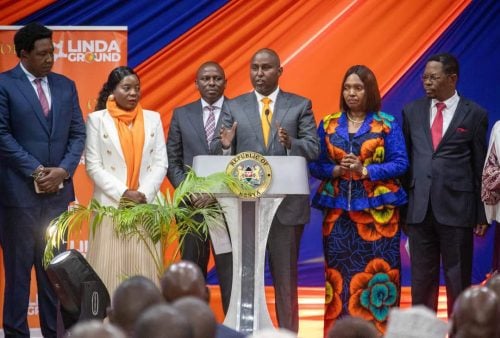
The agreement, which included joint parliamentary engagements and policy coordination, was widely interpreted as a soft reset of relations between President William Ruto and ODM leader Raila Odinga.
However, within Azimio ranks, the deal was seen by some leaders as a betrayal of the coalition’s original opposition mandate, accelerating fractures between ODM and smaller affiliate parties.
Martha Karua’s exit and shifting loyalties
The coalition also suffered political setbacks following tensions involving key principals such as the then NARC-Kenya leader Martha Karua, who served as Raila Odinga’s running mate in the 2022 election.
Karua, who had been a central figure in Azimio’s leadership structure, later distanced herself from key coalition decisions and was linked to broader dissatisfaction within opposition ranks over strategic direction and internal consultations.
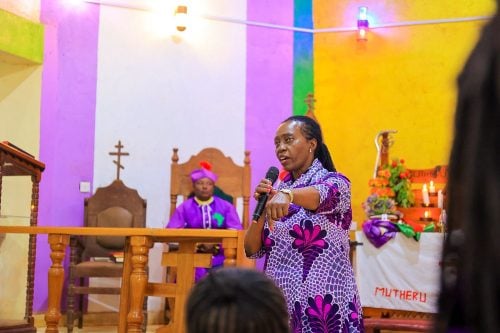
Her shifting political posture reflected wider uncertainty among Azimio affiliates over whether to maintain a hardline opposition stance or engage selectively with government initiatives.
Wamalwa said Azimio’s cohesion began to unravel when some leaders started crossing over to the government side, weakening the coalition’s shared vision that had initially united parties under Raila Odinga’s presidential bid.
He argued that the opposition formation was built on a clear ideological mission to challenge the Kenya Kwanza administration, but that mission became diluted as political interests shifted after the 2022 General Election.
Gen Z protests and claims of political betrayal
Wamalwa also referenced the 2024 Gen Z-led protests against the Finance Bill, saying the youth movement had called on opposition leaders to remain steadfast in defending public interests.
Instead, he claimed, the subsequent political engagements and cooperation deals left many young protesters disillusioned, arguing that opposition leaders had failed to fully stand with their demands.
The Gen Z protests, which marked one of the most significant youth-led political movements in recent years, reshaped Kenya’s political landscape and forced both government and opposition actors to reconsider their strategies.
“The Gen Z had asked that Baba, you have fought for us for long; just sit on this, tuwaachie. That’s all they asked, but when we came to the table, hatukuwaachia. We instead crossed over to the side of the oppressor and signed an agreement to share power. We left them on the streets; nothing has changed since,” Wamalwa said.
Azimio la Umoja was formed as a broad alliance of political parties including ODM, Jubilee, Wiper, Narc-Kenya and others, and served as the main opposition bloc after the 2022 elections.
However, internal disagreements, leadership reshuffles, and shifting alliances have gradually weakened its cohesion, leaving questions about its future role in Kenya’s evolving political landscape.