CS Wandayi to Luos: None of your leaders now has money that can run against Ruto and win
By Kepher Otieno, December 20, 2025Energy Cabinet Secretary Opiyo Wandayi’s call for Nyanza to align politically with President William Ruto signals a decisive shift in the region’s long-standing opposition posture.
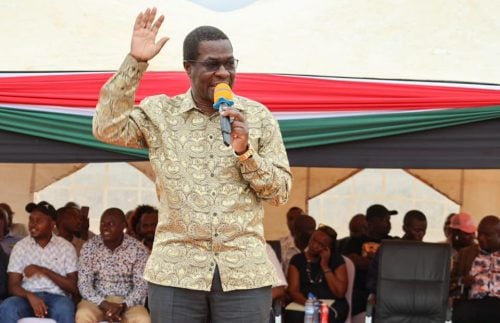
Speaking in Kisumu County, on Friday, December 19, 2025, Wandayi framed his message as a moment of political reckoning, urging the community to reassess decades of opposition politics.
“We must establish the objective interest of the Luo. Why have we for many years been in opposition? What were we fighting for? Let’s rethink,” he said, presenting the argument as one rooted in self-interest rather than ideological surrender.
Central to Wandayi’s position is his assertion that opposition politics in Nyanza has lost strategic value. He dismissed the possibility of a credible anti-Ruto campaign emerging from the region, arguing that political realities have overtaken historical loyalties.
“There is nobody who can marshal a campaign against Ruto in Nyanza now and win,” he stated, suggesting that the balance of power no longer favours confrontation. This view reflects a broader acknowledgement among some leaders that the region’s influence has been constrained by prolonged exclusion from executive authority.
Wandayi anchored his appeal in the legacy of Raila Odinga, portraying current political cooperation as a continuation rather than a betrayal of past struggles. He argued that Odinga had already determined the most advantageous path for the community.
“Raila defined what was beneficial to the community. He took us to the government, and that’s where we are now. We must stick with the government. No excuse,” Wandayi said. By invoking Odinga’s authority, he sought to legitimise continued participation in government as both principled and practical.
His remarks align with a broader defence of the broad-based government arrangement that has brought former rivals into a shared political framework. Wandayi and other leaders have repeatedly described the cooperation between President Ruto and Odinga-aligned figures as stable and irreversible, dismissing speculation about internal fractures. The message has been consistent: engagement within government offers more tangible benefits than renewed opposition, particularly as the 2027 elections draw closer.
Other senior leaders from the region have reinforced this message, calling for unity and discipline within political ranks. Homa Bay Governor Gladys Wanga urged leaders to avoid public dissent and focus on collective goals, warning that internal divisions could weaken the region’s bargaining power.
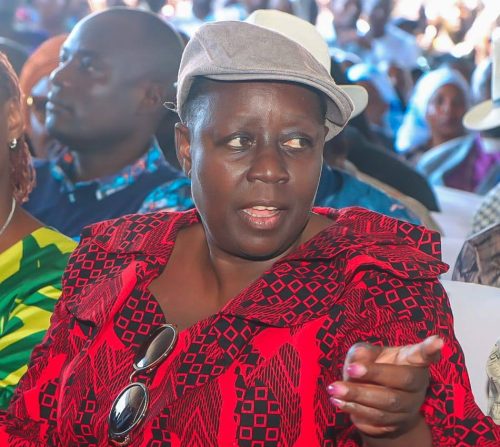
Ruth Odinga’s remarks
Kisumu Woman Representative Ruth Odinga echoed this sentiment, arguing that cohesion was essential if the region hoped to secure greater representation and influence in the next electoral cycle. Both leaders emphasised that fragmentation would only undermine Nyanza’s standing within the national political equation.
Alongside calls for unity, leaders have shifted attention toward voter mobilisation as a tool for influence rather than protest. Plans to register large numbers of new voters in Nyanza reflect a strategy aimed at strengthening the region’s negotiating position within government rather than challenging it from outside.
By increasing electoral numbers, proponents of this approach believe the region can demand a stronger voice in policy decisions and future government formations.
However, Wandayi’s blunt assessment of opposition viability also highlights a deeper debate about the future of dissent in Kenyan politics. His argument that the region lacks the time and resources to mount a successful challenge underscores concerns that opposition spaces are narrowing as dominant political blocs expand.
For critics, this raises questions about accountability and democratic balance, particularly when political inclusion is achieved through accommodation rather than contestation.
Reactions by the grassroot
At the grassroots level, the proposed political realignment remains contentious. Nyanza voters have historically been wary of leaders perceived to abandon reformist causes, especially those associated with Raila Odinga’s long struggle against entrenched power.
While some may view Wandayi’s approach as pragmatic, others see it as a departure from the ideals that defined the region’s political identity. Whether the promise of development and access to power will outweigh these concerns remains uncertain.
Internal debates within opposition-leaning parties continue, with some voices cautioning against sacrificing long-term principles for short-term gains. Calls for reflection on party direction and internal consultation suggest that consensus is still evolving. Even as leaders urge unity behind the government, underlying tensions persist about the cost of political compromise.
Ultimately, Wandayi’s message represents more than a call for electoral alignment; it reflects a broader shift in Kenya’s political culture toward power-sharing and coalition dominance.
If Nyanza embraces this direction, it could significantly weaken traditional opposition structures and reshape national politics ahead of 2027. Whether this moment is remembered as a strategic adaptation or a fundamental turning point in the region’s political identity will depend on how voters respond to the argument that influence is best secured from within government rather than from the margins.