Why Kenya Airways deployed a 400-seater jet to Nairobi-Mombasa route
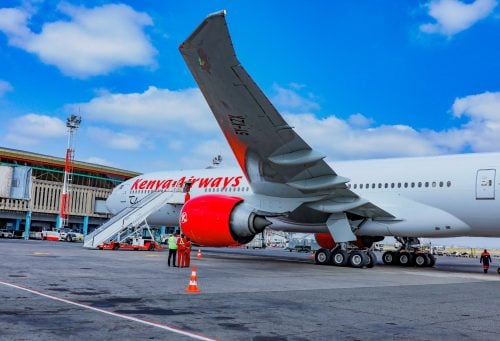
By Francis Muli, July 17, 2026For five days in July, passengers travelling between Nairobi and Mombasa witnessed an unusual sight at Jomo Kenyatta International Airport (JKIA): a massive Boeing 777-300ER, an aircraft normally associated with long-haul flights to Europe and Asia, operating on a route that takes less than an hour.
The 400-seat aircraft, one of the largest in Kenya Airways’ fleet, has replaced the smaller Boeing 737s and Embraer jets that usually serve the busy domestic corridor.
To attract passengers, the national carrier has gone a step further by cutting return fares by up to 50 per cent during the promotional period, triggering excitement among aviation enthusiasts and bargain hunters alike.
But behind the eye-catching promotion lies a broader operational and commercial strategy.
A return years in the making
The Boeing 777-300ER recently rejoined the Kenya Airways fleet after spending years on lease to Turkish Airlines.
Rather than sending the aircraft directly onto intercontinental routes, the airline opted to first deploy it domestically between July 12 and July 16, 2026, allowing engineers, pilots, cabin crew and ground staff to familiarise themselves with the aircraft before it resumes international operations.
Kenya Airways has confirmed that the aircraft is scheduled to return to the Nairobi–London Heathrow route from July 17, 2026, marking its return to one of the airline’s flagship long-haul services.
According to the airline, beginning with domestic operations allows thousands of Kenyan travellers to experience the aircraft before it transitions back to international service.
Speaking during the aircraft’s reintroduction, Kenya Airways Group Managing Director and CEO Allan Kilavuka said the return of the Boeing 777-300ER represents another milestone in the airline’s recovery and fleet optimisation strategy.
Publicity campaign?
While the discounted fares have attracted significant public attention, aviation analysts say the exercise serves several important operational purposes.
Large commercial aircraft require extensive crew familiarisation after long periods away from an airline’s network.
Pilots need refresher flights, cabin crews must rehearse emergency procedures, and maintenance teams must validate systems under normal operating conditions before regulators and airline management are fully comfortable assigning the aircraft to demanding long-haul missions.
Operating several short domestic sectors enables these processes to be completed efficiently while carrying paying passengers rather than conducting empty positioning flights.
Industry publication AeroRoutes notes that Kenya Airways scheduled multiple Boeing 777-300ER rotations between Nairobi and Mombasa during the five-day programme before the aircraft resumes international duties.
Why Mombasa?
The Nairobi–Mombasa route is Kenya’s busiest domestic air corridor.
It combines high passenger demand with relatively short flight times, allowing the aircraft to complete several rotations each day.
That makes it ideal for crew training and aircraft testing.
The route also attracts a diverse mix of travellers, from business executives and government officials to tourists heading to the Coast, giving Kenya Airways an opportunity to showcase one of its flagship aircraft to a broad customer base.
The airline has described the initiative as giving Kenyans “the first opportunity to experience one of the most iconic aircraft in our fleet” before it returns to international operations.
A boost for domestic tourism
The timing of the promotion also aligns with Kenya’s peak domestic holiday season.
Schools are on break, tourism activity along the Coast is increasing and many families are travelling.
By reducing fares by up to 50 per cent on return tickets, Kenya Airways is encouraging more Kenyans to fly rather than travel by road or rail.
The airline said the discount applies to return fares on Kenya Airways-operated services during the promotional window, subject to seat availability, although taxes and surcharges remain payable.
Industry observers say the campaign serves both commercial and marketing objectives.
Besides filling seats, it generates significant publicity around the return of an aircraft that has long been associated with Kenya Airways’ international ambitions.
Why the Boeing 777 matters
The Boeing 777-300ER is one of the world’s most successful long-haul aircraft.
Unlike narrow-body aircraft such as the Boeing 737, which dominate domestic routes, the twin-aisle 777 is designed to carry several hundred passengers over intercontinental distances.
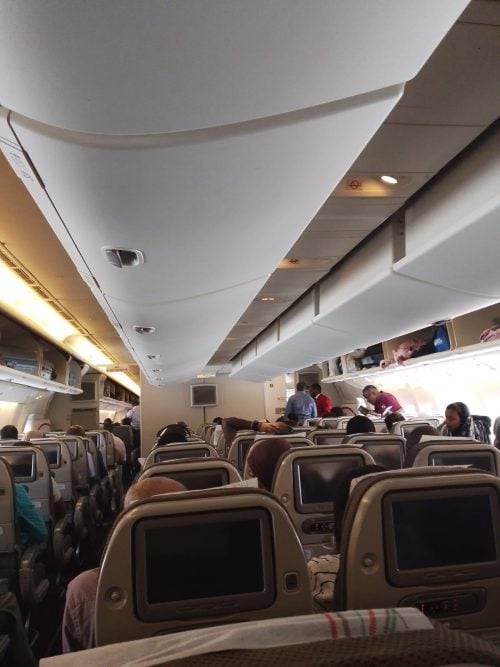
Depending on airline configuration, the aircraft can accommodate around 400 passengers, offering substantially greater capacity than the narrow-body aircraft commonly deployed on domestic services.
Its deployment on the Nairobi–Mombasa route therefore represents a rare opportunity for domestic travellers to experience a long-haul cabin without leaving the country.
The return of the Boeing 777-300ER comes as Kenya Airways continues implementing its long-term recovery strategy after years of financial challenges.
The airline has gradually improved its operational performance, expanded key routes and strengthened its network as international travel recovers.
Returning leased aircraft to active service enables Kenya Airways to optimise fleet utilisation while reducing dependence on leased capacity for major international routes.
London remains one of the airline’s most important destinations because of strong passenger demand, tourism and cargo traffic.
Deploying the Boeing 777 on the route increases available seats while providing additional cargo capacity, an increasingly important source of airline revenue.
Kenya Airways’ decision to slash fares also intensifies competition on the Nairobi–Mombasa route.
Passengers travelling between the two cities already have several options, including Jambojet, Safarilink and Skyward Express, alongside the Standard Gauge Railway and long-distance buses.
Temporary fare reductions could encourage travellers who might otherwise have chosen rail or road transport to opt for flying instead.
For Kenya Airways, the promotion also helps maximise passenger loads during the aircraft’s domestic familiarisation period.
A glimpse into the future
Although the Boeing 777’s appearance on the Nairobi–Mombasa route is temporary, it offers a glimpse into Kenya Airways’ broader ambitions.
The airline is seeking to rebuild its international network while maintaining a strong domestic presence that feeds passengers into long-haul services through Nairobi.
Once the promotion ends, the aircraft will shift to its intended role, connecting Kenya with major international destinations, beginning with London Heathrow.
For thousands of Kenyan travellers, however, the five-day domestic deployment has provided something unusual: the chance to fly aboard one of Africa’s largest passenger aircraft on a journey lasting less than an hour, at a fraction of the normal cost.
For Kenya Airways, the exercise is both a celebration of the aircraft’s return and a practical step in preparing one of its most valuable assets for international skies once again.