Trump threatens to block opening of Detroit-Canada bridge
By Al Jazeera, February 10, 2026United States President Donald Trump has threatened to block the opening of a new Canadian-built bridge linking Canada and the US across the Detroit River, demanding that Canada hand over at least half of the bridge’s ownership and meet other unspecified conditions.
“I will not allow this bridge to open until the United States is fully compensated for everything we have given them and, importantly, until Canada treats the United States with the fairness and respect we deserve,” Trump wrote on social media.
“We will start negotiations, IMMEDIATELY. With all that we have given them, we should own, perhaps, at least one half of this asset,” he wrote on his Truth Social.
Trump included an image of the new Ksh7.3.8 billion Gordie Howe International Bridge project, which connects Detroit, Michigan, with Windsor, Ontario.
The bridge is expected to open in early 2026. On January 30, 2026, the US Department of Homeland Security published a rule designating the bridge as an official port of entry. The project was negotiated by former Michigan Governor Rick Snyder, a Republican, and financed by the Canadian government.
The bridge is designed to ease heavy truck traffic currently handled by the Ambassador Bridge.
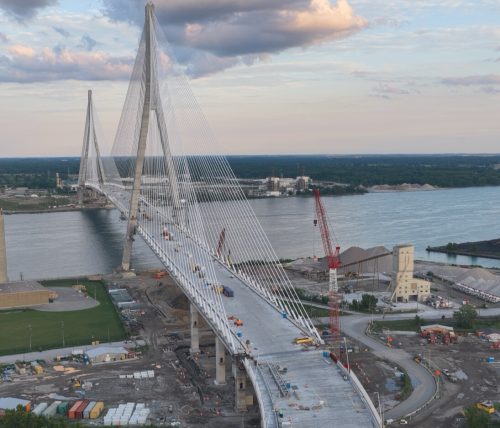
According to a University of Windsor study, the Gordie Howe Bridge could cut up to 20 minutes off crossing times, saving truckers an estimated Ksh351 billion over 30 years.
Construction has been underway since 2018.
Michigan Senator Elissa Slotkin, a Democrat, warned that cancelling the project would have major economic consequences.
“Cancelling this project will have serious repercussions – higher costs for Michigan businesses, less secure supply chains and, ultimately, fewer jobs,” she said.
US-Canada spat
Trump has made several threats targeting Canada during his second term, including sharply increasing tariffs on US imports from its northern neighbour.
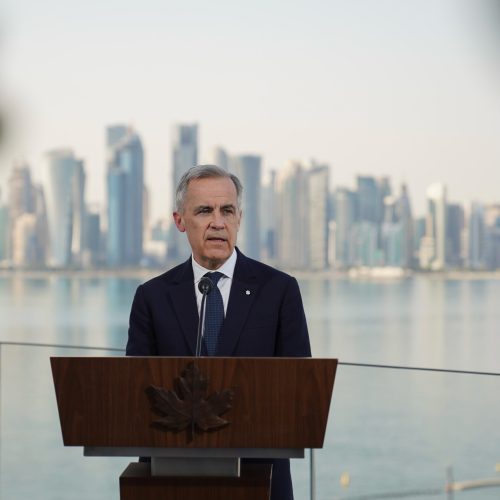
In January, Canadian Prime Minister Mark Carney travelled to China to reset strained bilateral ties, reaching a trade agreement with Canada’s second-largest trading partner after the US.
Trump also said in January that the US could decertify Bombardier Global Express business jets, and threatened 50 per cent tariffs on all aircraft made in Canada unless Ottawa certified several aircraft produced by US rival Gulfstream.
So far, the Trump administration has not taken action against Canadian aircraft.
The slew of disagreements comes as the US and Canada prepare to renegotiate the United States-Mexico-Canada Agreement (USMCA), which Trump signed during his first term.