Shell Kenya reports temporary fuel stock-outs amid high demand
By Kenneth Mwenda, March 26, 2026Shell Kenya has reported temporary stock-outs at some of its service stations, citing increased demand for fuel across the country. The company said its teams are working to replenish affected stations as quickly as possible to ensure reliable supply.
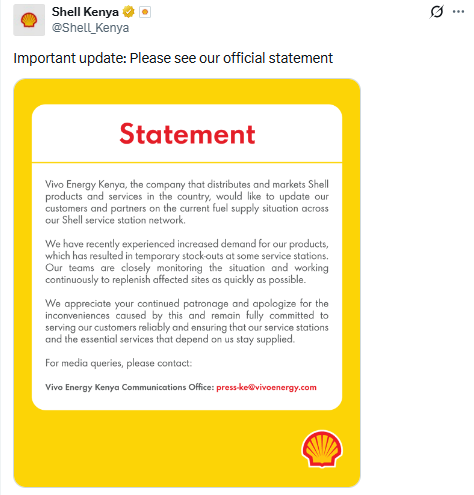
Vivo Energy Kenya, which distributes and markets Shell products and services locally, issued a statement on Thursday, March 26, 2026, updating customers and partners on the situation.
“We have recently experienced increased demand for our products, which has resulted in temporary stock-outs at some service stations,” the company said. “Our teams are closely monitoring the situation and working continuously to replenish affected sites as quickly as possible.”
The company apologised for the inconvenience and reassured the public of its commitment to keeping service stations and essential services supplied.
“We appreciate your continued patronage and apologise for the inconveniences caused by this and remain fully committed to serving our customers reliably,” the statement added.
The temporary shortages at Shell stations come amid rising global fuel prices that have affected both local and international markets. Energy and Petroleum Cabinet Secretary Opiyo Wandayi has warned oil marketing companies against hoarding fuel or withholding stocks in anticipation of price changes.
“Notwithstanding the stable supply position… we note with concern reports of product hoarding and speculative withholding of stocks,” Wandayi said on March 25. He added that any company attempting to take advantage of the situation could face serious sanctions.

The government has emphasised that the country’s systems for importing, storing, and distributing fuel remain fully operational. Wandayi urged motorists to remain calm and avoid panic buying, warning against the use of jerry cans at petrol stations.
Fuel surge hits aviation
The challenges in the fuel market are also affecting other sectors, particularly aviation. On March 26, Skyward Airlines announced that it will introduce a fuel surcharge on all ticket prices starting April 1, 2026.
“Effective 1st April 2026, a fuel surcharge will be applied to all Skyward Airlines ticket prices,” the airline said. It explained that imported aviation fuel forms a large part of operational costs, and the recent rise in global prices has made flights more expensive to run.
“The aviation industry continues to navigate the impact of rising global fuel costs, driven by sustained supply pressures in international markets,” the airline added. Skyward said the surcharge is a necessary step to maintain sustainable operations while continuing to provide reliable service to passengers.

Passengers should expect slightly higher ticket costs from April, although the airline has not disclosed the exact amount. Skyward emphasised its commitment to transparency and fair pricing and said it will continue to review the situation.
“We are committed to offering you competitive, transparent pricing and we will continue to monitor the situation closely,” the airline said.
Globally, fuel prices have surged following tensions in the Middle East, including the escalation of conflicts involving the US, Israel, and Iran. Brent crude has recently traded above Ksh12,900 ($100) per barrel, raising fears of supply shortages and higher costs for businesses worldwide.
For motorists and travellers in Kenya, the combination of local demand spikes and global market instability has translated into temporary fuel shortages at some stations and higher fares on certain flights.