Oil prices rise after ships attacked near Strait of Hormuz
By BBC, March 2, 2026Global oil prices have risen after at least three ships were attacked near the Strait of Hormuz, as Iran continues to launch strikes across the Middle East in response to ongoing attacks by the US and Israel.
Two vessels have been struck, and an “unknown projectile” was reported to have “exploded in very close proximity” to a third, the UK Maritime Trade Operations Centre (UKMTO) said.
Iran has warned ships not to pass through the strait, which carries about 20 per cent of the world’s oil and gas.
International shipping has almost come to a standstill at the strait’s entrance, with analysts warning that a prolonged conflict could push energy prices even higher.
In early trade in Asia on Monday, March 2, 2026, global oil prices jumped by more than 10 per cent before those gains eased during the morning.
Brent crude was more than 4 per cent at Ksh9,826.27 per barrel, while US-traded oil was also up by around 4 per cent at Ksh8,988.92.
“The market isn’t panicking”, Saul Kavonic, head of energy research at MST Research, told the BBC.
“There is more clarity that so far, oil transport and production infrastructure hasn’t been a primary target by any side,” he added.
“The market will be watching for signs that traffic through the Strait of Hormuz returns, which would see oil prices subside again.”
But some analysts have warned it could go over Ksh12,902.10 in the event of a prolonged conflict.
On Sunday, the Opec+ group of oil-producing nations – which includes Saudi Arabia and Russia – agreed to increase their output by 206,000 barrels a day to help cushion any price rises, but some experts doubt this would help much.
Edmund King, president of the AA, warned the disruption could drive up petrol prices around the world.
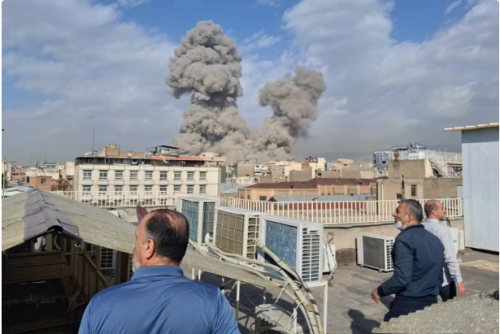
“The turmoil and bombing across the Middle East will surely be a catalyst to disrupt oil distribution globally, which will inevitably lead to price hikes,” he said.
“The magnitude and duration of pump price increases depends on how long the conflict goes on.”
Iran’s Islamic Revolutionary Guards Corps (IRGC) said three tankers from the UK and US had been “struck by missiles and are burning”. The UK and the US have not commented.
The UKMTO said “multiple security incidents” had been reported across the Arabian Gulf and Gulf of Oman, and it has advised ships to “transit with caution”.
At least 150 tankers have dropped anchor in open Gulf waters beyond the Strait of Hormuz, although a handful of Iranian and Chinese vessels have passed through today, according to ship-tracking platform Kpler.
“Because of Iran’s threats, the strait is effectively closed,” Homayoun Falakshahi from Kpler told BBC News.
“The vessels have taken a precautionary measure not to enter as the risks are too high and their insurance costs have sky-rocketed.”
He said the US would likely try to protect shipping routes which, if effective, would prevent an oil price spike, but if the strait remained shut for a long period prices could go “much, much higher”.
The UKMTO said two vessels, which it did not identify, were hit by unknown projectiles, causing fires.