Mbadi reveals govt’s plan to minimise supplementary budgets after expenditure concerns
By Aloys Michael, June 11, 2026Treasury Cabinet Secretary John Mbadi has unveiled the government’s plan to significantly reduce the use of supplementary budgets, citing the need for better planning and stronger fiscal discipline ahead of the 2026/27 Budget presentation in the National Assembly.
Speaking during a Thursday, June 11, 2026, interview ahead of the budget reading, Mbadi said the government is pursuing reforms aimed at ensuring that expenditure is accurately captured in the main budget to avoid frequent mid-year adjustments that have often attracted criticism.
Mbadi acknowledged longstanding weaknesses in Kenya’s budgeting process, arguing that inadequate planning has been a major contributor to supplementary spending.
“I’ve actually been a proponent of planning, and I’ve said before that the problem that we have in our budgeting process is that we are not linking plans to budget,” he said.
To address the challenge, the Treasury plans to introduce a National Planning Bill, a framework that Mbadi says is currently missing despite the existence of laws governing public finance management, procurement and asset management.

“We don’t have any law on national planning, and so that is a law that we are going to introduce this year so that we can have proper plans,” he stated, adding that effective planning is essential for a sound budget and financial strategy.
The remarks come amid growing public scrutiny over government expenditure, particularly following revelations about increased allocations to State House through supplementary budgets.
Treasury documents submitted to the National Assembly showed that State House received additional funding under Article 223 of the Constitution, pushing its budget to Ksh16.998 billion, the highest level recorded since 2013.
The expenditure sparked debate over fiscal prudence, with comparisons showing Kenya’s State House spending surpassing that of several African countries, including Nigeria, South Africa, Algeria and Tanzania.
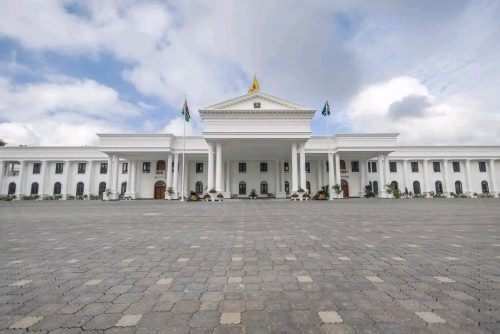
Controller of Budget Margaret Nyakang’o has also warned that the institution risks exhausting its allocation before the end of the financial year.
Mbadi, however, defended the government’s efforts to limit supplementary spending, noting that the Treasury largely succeeded in aligning expenditure with budget estimates during the current financial year.
“If it were not for some disruptions that we have seen, especially the war in the Middle East and a bit of underperformance by KRA, there was going to be no need really for a supplementary budget,” he said.
Looking ahead, Mbadi expressed optimism that Kenya could eventually eliminate supplementary budgets in the absence of emergencies such as droughts, floods or external shocks.
“In the next two or so years, if there is no disruption, we should not have any supplementary budget at all. That is the ideal, that is where we should go, and that is what good planning is all about,” he said.