Mbadi highlights choice of Vodacom in sale of Safaricom stake as to safeguard business disruption
By Kenneth Mwenda, January 14, 2026National Treasury Cabinet Secretary John Mbadi has defended the sale of a 15 per cent stake in Safaricom PLC to Vodacom, saying the decision to select an established partner was made to prevent potential business disruption.
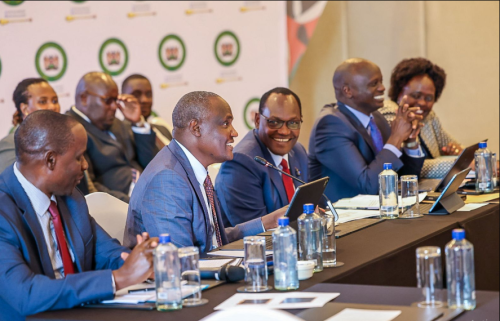
Mbadi appeared before a joint sitting of parliamentary committees on finance, national planning, public debt, and privatisation on Tuesday, January 13, 2026, to explain the government’s approach. He told lawmakers that the choice of Vodacom as the sole buyer ensures continuity in Kenya’s largest telecommunications firm.
“The three years is not about the governance. The three years is only covering two agreements. One on staff that we are not going to, there will be no staff redundancies until after three years,” he said.
“The more reason why we went for this established partner who is in this space is to safeguard against business disruption. If we went for someone else, there would be a possibility of such disruption.”
He added that the size of the transaction, which involves over six billion shares, further justified the decision to sell to an experienced partner.
Under the plan, the government will sell 6,009,814,200 shares at Ksh34 per share, representing 15 per cent of Safaricom. The price is 23.6 per cent above the six-month volume-weighted average price as of December 2025. If approved, Vodacom’s stake will rise to 55 per cent, giving it a controlling interest, while the government retains 20 per cent.
Funds to support infrastructure
Mbadi said the sale is expected to raise Ksh244.2 billion for the consolidated fund. He stressed that the funds will not be used for budgetary support but will provide seed capital for the proposed National Infrastructure Fund (NIF) and the Sovereign Wealth Fund. The proceeds will be directed to critical sectors, including energy, roads, water, airports, and digital infrastructure.
Lawmakers raised concerns over the choice of a single buyer, public participation, protection of minority shareholders, and staff welfare. Chesumei MP Paul Biego asked why the government did not consider a competitive bidding process, while Kitui Rural MP David Mboni questioned the three-year protection period for Vodacom’s stake.
Mbadi responded that selecting a partner with proven experience was essential to protect operational stability and maintain investor confidence. He added that the government will retain two seats on Safaricom’s board, and safeguards include commitments on employment stability, board leadership, and continued support for the Safaricom Foundation.
He also noted that the sale signals a shift towards alternative financing methods at a time when fiscal space is limited and traditional sources of funding are increasingly constrained. Mbadi highlighted that the Nairobi Securities Exchange has the capacity to handle large transactions, reflecting confidence in Kenya’s capital markets.