Advertisement
Kenya’s growth masks deep fiscal crisis as revenues lag behind – Report
Sunday 03rd May, 2026 12:34 AM|

Kenya’s economy is expanding again, inflation is easing, and key sectors, from agriculture to digital services, are showing resilience.
On paper, the outlook appears stable, even optimistic. But beneath the surface, a troubling contradiction is emerging: the country is growing without getting richer in a way that sustains the state.
A new outlook by LEAF Africa released on Friday, May 1, 2026, describes this phenomenon bluntly as hollow growth, where rising GDP fails to translate into stronger public revenues.
LEAF Africa is a leading independent, private institution focused on data, research, and strategic insight on Africa’s markets and economies.
You Might Also Like


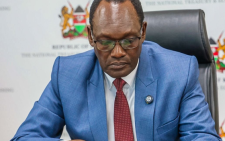
According to the report, Kenya’s tax-to-GDP ratio has remained stuck at 14–15 per cent despite years of economic expansion.

This disconnect is not just a technical fiscal issue. It is increasingly shaping the country’s ability to fund essential services, manage debt, and invest in long-term development.
“A central theme of the 2026 outlook is the emerging phenomenon of ‘hollow growth,’ where expansion in Real GDP has not been matched by proportional gains in tax revenue mobilisation,” the report notes.
Kenya’s GDP growth has held relatively steady, averaging close to 5 per cent in recent years, supported by a diversified mix of sectors including agriculture, ICT, tourism, and financial services.
But much of this growth is happening in areas that are difficult to tax.
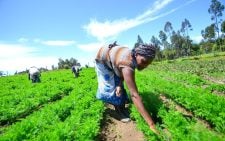
The informal economy, estimated to account for a significant share of employment and output, remains largely outside the tax net. At the same time, subsistence agriculture, which has expanded following improved rainfall cycles, contributes to GDP but generates limited direct revenue for the state.
This structural reality means that even as economic activity increases, the government captures only a fraction of the value being created. The result is a widening gap between growth and fiscal capacity.

The strain on public services
The consequences are already visible. With revenue growth lagging behind economic expansion, the government faces increasing pressure to fund essential services such as healthcare, education, and infrastructure.
At the same time, debt obligations continue to mount.
Despite efforts at fiscal consolidation, Kenya’s limited revenue base constrains its ability to expand spending without resorting to borrowing.
“Dynamic presents a profound challenge to fiscal sustainability, especially as the country attempts to balance development needs with debt servicing,” the LEAF Africa report warns.
For ordinary Kenyans, this fiscal squeeze is felt in subtle but significant ways, such as overcrowded hospitals, underfunded schools, and rising taxes on the formal sector.
The burden of imbalance
Ironically, the burden of taxation is becoming increasingly concentrated on a narrow segment of the economy, formal businesses and salaried workers, while large portions of economic activity remain untaxed.
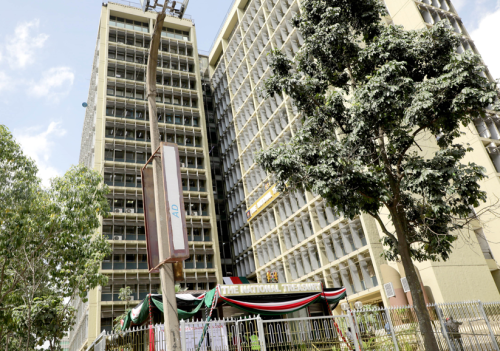
“This imbalance risks creating a cycle of resistance and fiscal fatigue, where repeated tax measures become politically and socially difficult to sustain,” the study observes.
Efforts by the National Treasury to raise the tax-to-GDP ratio to 20 per cent by 2027 face stiff headwinds, not only from public opposition but also from the structural nature of the economy itself.
Kenya’s macroeconomic picture is not without positives. Inflation has eased, foreign exchange reserves have improved, and remittances continue to provide a steady inflow of dollars.
Yet these gains risk masking deeper vulnerabilities.
Economic stability built on external inflows and consumption-driven growth may not be enough to sustain long-term development if the state lacks the revenue to invest in productivity, infrastructure, and social services.
According to LEAF Africa, addressing hollow growth will require more than short-term tax measures. It will demand structural reforms, broadening the tax base, formalising parts of the informal economy, improving compliance, and shifting growth toward sectors that generate both output and revenue.
It also means rethinking how growth is measured and valued.
Author
Latest News





Advertisement
More on Business