Kenyan shilling weakens against USD, goes beyond 130 mark after months of stability
By Kenneth Mwenda, April 2, 2026The Kenyan shilling has weakened past the 130 mark against the US dollar, signalling growing pressure on the local currency as global tensions linked to the US–Iran war continue to affect markets.
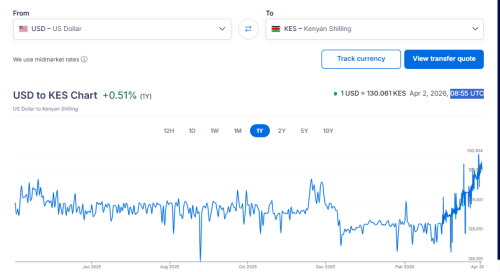
Latest market data (as of March 2, 2026, 08:55 UTC) shows the shilling trading at about 130.06 per dollar, its weakest level since August 2024. This marks a steady decline from around 129.02 recorded on February 27, just before the conflict began.
The movement may appear small, but it ends a long period of stability. For more than a year, the shilling had held within a narrow band around 129, making it one of the least volatile currencies globally.
Analysts say the shift reflects changes in global investor behaviour. As uncertainty rises, investors are moving funds into safer assets such as the US dollar.
At the same time, demand for dollars within Kenya has increased. Traders say importers and manufacturers have rushed to secure foreign currency amid fears of limited supply due to the ongoing war.
This combination of global and local factors has pushed the shilling beyond the 130 level for the first time in months.
Stable but risks rising
Despite the weakening, the currency has not shown sharp swings. It remains relatively stable compared to many emerging market currencies. Recent data ranked the shilling among the least volatile globally, with a volatility rate of about 1.5 per cent over the past year.
However, continued depreciation could have wider effects on the economy.
A weaker shilling raises the cost of imports, especially fuel, which Kenya relies on heavily. Higher import costs often pass through to consumers, pushing up inflation and increasing the cost of living.
It also affects public finances. A weaker currency increases the cost of servicing external debt, which is largely denominated in dollars.
The Central Bank of Kenya notes that a weaker currency can also bring some benefits. It can make Kenyan exports such as tea, coffee and horticulture more competitive in international markets.
But economists say these gains take time. Export volumes do not rise immediately, while the cost of imports increases almost at once.
For now, the shilling’s slide reflects external pressure rather than domestic weakness. Much will depend on how long the conflict lasts and how global markets respond.
If tensions ease, the currency could stabilise. If they persist, the shilling may come under further pressure in the coming months.