Kenya seeks mineral exploration partnership with US in new deal
By Kenneth Mwenda, February 4, 2026Kenya is advancing a bilateral trade agreement with the United States while securing the extension of the African Growth and Opportunity Act (AGOA), with mineral exploration and processing at the centre of the partnership.
Cabinet Secretary for Investments, Trade and Industry Lee Kinyanjui said on Wednesday, February 4, 2026, that the country aims to stop exporting raw minerals and instead develop local value chains that create jobs and boost revenues.
“Kenya is advancing a bilateral agreement with the US even as we eye AGOA extension. We are partnering with the US on mineral exploration and processing to avoid exporting raw minerals and also take advantage of opportunities in the digital space to create jobs for the youth,” Kinyanjui stated on his X account.
Kenya holds significant deposits of critical minerals, including rare earth elements along the coast and other resources essential for electronics, renewable energy, and electric vehicles.
Kenya positions itself as a reliable partner by inviting American investment in exploration, extraction, and local processing. The main minerals tied to Kenya’s push for US partnerships in exploration and processing are rare earth elements (REEs) and niobium. These come from deposits along the coast, especially at Mrima Hill in Kwale County.
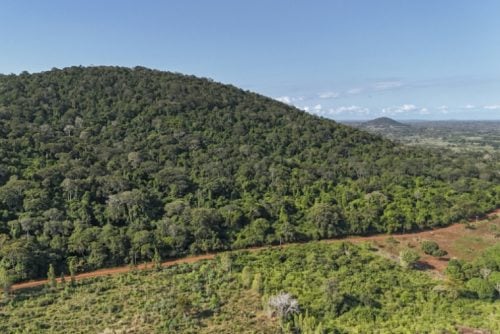
Kenya targets rare minerals
Mrima Hill, a forest covering about 390 acres near Kenya’s Indian Ocean coastline, sits on vast rare earth deposits. A 2013 estimate by Cortec Mining Kenya, a subsidiary of Pacific Wildcat Resources, valued the minerals at more than $60 billion, including large deposits of niobium, a metal used to strengthen steel.
The site has attracted growing attention from global powers. According to a report published in October 2025, officials and investors from the United States, China and Australia have shown interest in the area, driven by rising global demand for rare earths and China’s tightening control over exports.
This focus on minerals is part of broader US-Kenya trade talks. Discussions cover value addition in mining alongside sectors like agriculture, manufacturing, and digital technology. Kenya is pushing for partnerships that transfer technology and build processing facilities on Kenyan soil. Local processing raises export values, reduces reliance on raw exports, and strengthens economic resilience.
US interest in Kenya’s mineral sector is growing. American firms are exploring opportunities in niobium, rare earths, lithium, and manganese, minerals critical to the global energy transition and high-tech industries.
AGOA provides a backdrop for these discussions. The US House of Representatives approved a three-year extension in January 2026, running until 2028, after AGOA expired in September 2025.
This renewal restores duty-free access for Kenyan goods, mainly textiles and apparel, safeguarding tens of thousands of jobs in export processing zones. While AGOA focuses on light manufacturing, the bilateral deal opens doors to heavier sectors like minerals.