IMF issues advisory on sovereign wealth funds as value increases
By Faith Lagat, July 28, 2026Sovereign wealth funds need stronger legal frameworks as their size, investment scope and mandates continue to expand, the International Monetary Fund (IMF) has said, warning that weak governance and unclear legal structures could undermine accountability and public confidence.
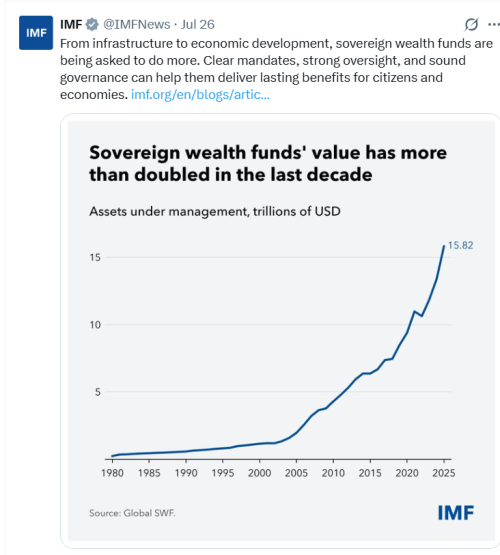
In an article published on July 21, 2026, the IMF said sovereign wealth funds now manage more than Ksh2.07 quadrillion in assets globally, up from about Ksh387 trillion in 2008.
The institution noted that the funds have evolved from serving primarily as fiscal stabilisation tools to becoming major investors in infrastructure, technology, private equity and real estate.
The IMF said governments are increasingly relying on sovereign wealth funds to preserve national wealth, strengthen economic resilience and support long-term development objectives amid growing geopolitical uncertainty.
Kenya’s sovereign wealth fund takes shape
The IMF’s observations come weeks after Kenya enacted the Sovereign Wealth Fund Act.
President William Ruto assented to the law on July 8, 2026, creating a legal framework for managing, investing and saving revenues generated from natural resources, including petroleum revenues, mining royalties, proceeds from government investments in resource enterprises and other approved sources.
Speaking during the Siaya Women Economic Empowerment Forum on July 11, 2026, Interior Principal Secretary for Internal Security Raymond Omollo said the legislation addresses a long-standing gap in managing the country’s natural resource wealth.
“The president has now made this a reality. As a country, we must ensure that the wealth generated from our natural resources benefits our people today while also securing the future of generations to come,” he said.
The law establishes three components within the fund: the Stabilisation Component to cushion the economy against revenue fluctuations, the Strategic Infrastructure Investment Component to finance national development projects and the Future Generation (Urithi) Component to preserve wealth for future generations. At least 10 per cent of the fund’s resources will be allocated to the Urithi Component.
All revenues will first be deposited into a holding account at the Central Bank of Kenya before allocation. The law also prohibits the use of the fund as collateral or for lending and limits investments to approved financial instruments.
IMF calls for stronger governance
The IMF said sovereign wealth funds require clearly defined legal mandates to ensure accountability and guide investment decisions.
It noted that countries adopt different models depending on national priorities. Commodity-exporting nations often establish stabilisation funds, while wealthier economies focus on long-term savings. Other countries use sovereign wealth funds to finance infrastructure and support economic diversification.
The IMF said countries pursuing multiple objectives should consider legally separating different mandates through distinct funds or ring-fenced sub-funds to improve governance and operational clarity.
Examples include Nigeria’s Sovereign Investment Authority, which maintains separate stabilisation, future generations and infrastructure funds, and Norway’s Government Pension Fund Global, which operates as a long-term savings fund under a strong fiscal framework.
Clear legal frameworks remain essential
The IMF said governance should be anchored in law through clearly defined powers, enforceable fiduciary duties, transparent reporting and effective oversight.
It added that operational independence should be supported by legal provisions governing deposits, withdrawals and accountability to legislatures and the public.
The institution said the Santiago Principles, developed in 2008 with IMF support, continue to provide an important foundation for sovereign wealth fund governance. However, it noted that today’s investment models, including direct investments, private equity, unlisted equity and co-investments, require stronger legal frameworks and more targeted governance measures.
The IMF said robust legal structures help ensure sovereign wealth funds serve national interests while supporting fiscal discipline, public accountability and long-term financial stability.