FAO says Kenya should replace food subsidies with smarter agriculture investments instead
By Aloys Michael, July 23, 2026Kenya could lower the cost of food permanently, not by spending billions on subsidies, but by investing in roads, irrigation, agricultural research and modern food storage, according to a new United Nations report that challenges conventional approaches to food affordability.
The 2026 edition of The State of Food Security and Nutrition in the World, jointly published by the Food and Agriculture Organisation (FAO), IFAD, UNICEF, WFP and WHO, says governments should prioritise long-term investments that reduce production and distribution costs rather than broad subsidies on staple foods.
“Lowering the cost of healthy diets requires coordinated investments across agrifood systems rather than relying on broad price subsidies,” the report states.
The findings are particularly relevant for Kenya, where food inflation and high transport costs continue to strain household budgets despite periodic government interventions aimed at lowering prices of staples such as maize flour.
Instead of blanket food subsidies Kenya has periodically relied on, the UN recommends directing public spending towards six areas with lasting impact: agricultural research and development (R&D), irrigation, rural roads, logistics, regional trade integration, cold-chain infrastructure and reducing food losses across the supply chain. These investments improve productivity, cut post-harvest losses and reduce the cost of getting food from farms to consumers.
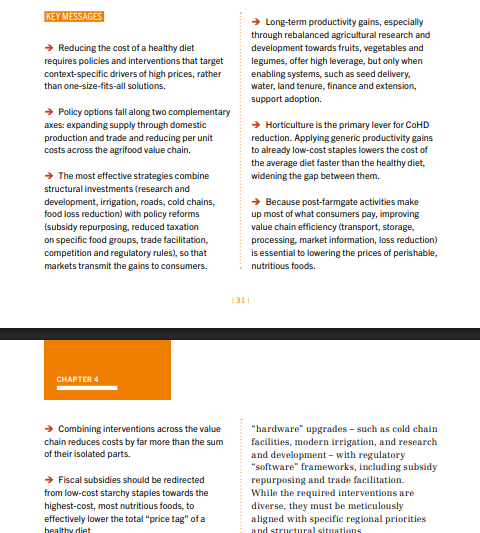
“Public investment in agricultural research and development, transport infrastructure and trade integration can reduce the cost of healthy diets by improving productivity and lowering marketing costs,” the report says.
The report identifies higher agricultural productivity, sustained public investment in agricultural research, efficient logistics and transport systems, effective trade integration and lower input costs as key factors associated with cheaper healthy diets.
For Kenya, this means improving the efficiency of the entire agricultural value chain rather than focusing solely on subsidising staple foods.
FAO notes that nutritious foods, including fruits, vegetables and animal-source products, account for nearly 70 per cent of the cost of a healthy diet globally, while starchy staples contribute only about one-sixth of the overall cost despite providing half of dietary calories. This suggests that policies targeting only staple foods have limited impact on making healthy diets affordable.
Agricultural research also emerges as one of the report’s strongest recommendations.

According to the UN, countries that consistently invest in agricultural R&D achieve higher productivity, better crop yields and lower food prices over time. These gains become even greater when supported by irrigation, quality seed systems, extension services and improved access to finance for farmers.
Reducing food losses is another major opportunity. Large quantities of fruits, vegetables, milk and other perishables are lost before reaching consumers because of inadequate storage, refrigeration and transport. Expanding cold-chain infrastructure would reduce spoilage, increase market supplies and help stabilise prices, especially during harvest seasons. The report also highlights efficient logistics and transport as essential to lowering food costs.
Regional trade integration is equally important. The UN argues that smoother cross-border trade allows food to move more efficiently from surplus areas to deficit markets, reducing shortages, improving competition and helping keep prices stable. Better roads and transport networks further reduce distribution costs, particularly in countries where moving food from farms to markets remains expensive.
The recommendations come as access to affordable healthy diets remains a growing challenge across Africa.
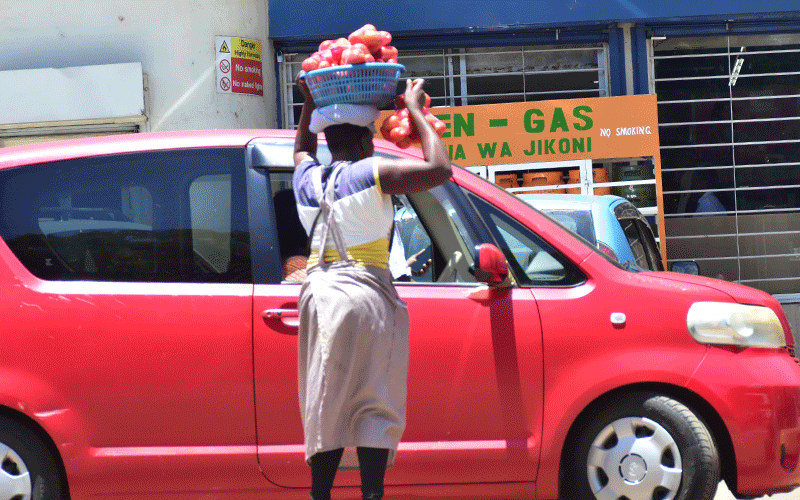
According to the report, the global average cost of a healthy diet increased to 4.28 purchasing power parity (PPP) dollars per person per day in 2025, up from 3.44 PPP dollars in 2021. While the global number of people unable to afford healthy diets has declined, Africa continues to lag, with an estimated 66.6 per cent of the population unable to afford a healthy diet in 2025, the highest rate of any region.
The report also notes that healthy diets remain out of reach for many because inflation continues to push food prices higher, underscoring the need for structural reforms that lower production and distribution costs rather than relying on short-term price interventions.
For Kenya, the report offers a clear policy direction. Rather than repeatedly financing broad food subsidies, policymakers could achieve more sustainable reductions in the cost of food Kenya households face by investing in agricultural innovation, irrigation, efficient transport, cold storage and regional trade.
Such Kenya agriculture investment, the UN argues, would strengthen food security, improve farmer productivity and support a more resilient food policy in Kenya while making nutritious foods more affordable for millions.