CBK: Remittances now account for 3.7% of Kenya’s GDP
By Sharon Atieno, June 16, 2026The Central Bank of Kenya (CBK) has said remittances have become a critical pillar of Kenya’s external stability, now contributing about 3.7 per cent of GDP and surpassing Ksh1.15 trillion in annual inflows.
He said remittances are no longer just household support but a key macroeconomic buffer in a period of global uncertainty and shifting capital flows.
“We are now seeing remittances as a pillar of macroeconomic stability. They are not only supporting households but also strengthening foreign exchange reserves and sustaining economic resilience,” Mudida said.
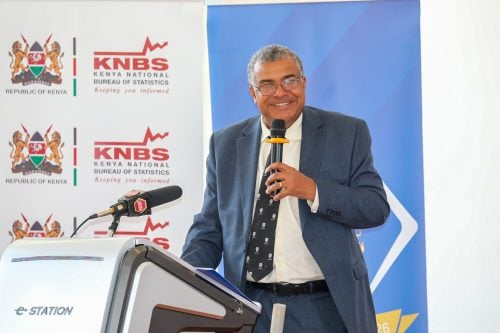
The survey estimates that Kenya received Ksh1.15 trillion between June 2024 and May 2025, with 91 per cent received in cash and 9 per cent in kind. Mudida noted that the inclusion of in-kind transfers is a major milestone in improving measurement of diaspora contributions.
He added that remittances from the United States, United Kingdom, Germany, Canada and Australia account for nearly 80 per cent of total inflows.
Remittances overtake aid and FDI
Mudida observed that remittance inflows have now overtaken both Foreign Direct Investment (FDI) and official development assistance, underscoring their growing role in financing household consumption and supporting the balance of payments.
According to the report, 42 per cent of households rely on remittances as supplementary income, 36 per cent as additional income, while 22 per cent depend on them as their main source of livelihood.
Banks lead as mobile money rises
The findings show banks remain the dominant formal channel at 43.7 per cent, followed by mobile money at 33 per cent, while money transfer operators and informal channels account for the rest.
Mudida said the strong role of digital and banking systems reflects Kenya’s advanced financial infrastructure, but warned that informal flows remain significant and undercounted.
Cost and delays remain key barriers
Households cited high transfer costs at 83.3 per cent as the biggest challenge, followed by long transfer times, strict KYC requirements, limited access to services and unfavourable exchange rates.
Mudida said reducing costs and expanding formal access points will be key to unlocking the full potential of remittances.
He urged policymakers to strengthen financial literacy and expand diaspora investment products to channel remittances into productive sectors such as agriculture, education, healthcare and small businesses.
“Remittances are not just transfers. They are lifelines, investments and bridges connecting Kenyans abroad with development at home,” he said.